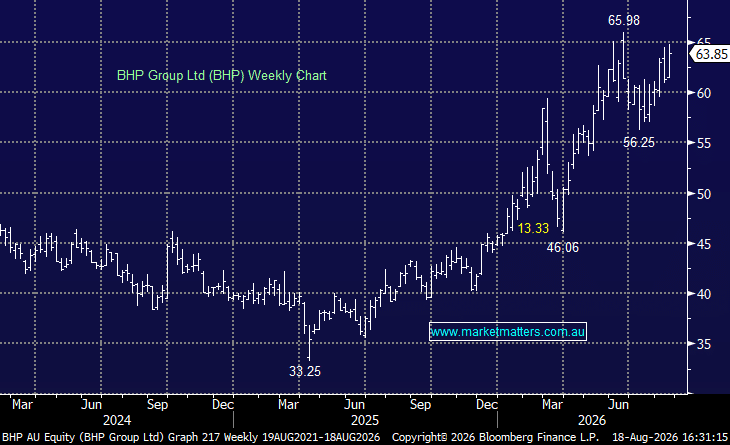
BHP +2.65%: delivered a strong FY26 result, with underlying profit, EBITDA and revenue all ahead of expectations, while the dividend was another clear positive. More importantly, the result reinforced the changing shape of the group, with copper now overtaking iron ore as BHP’s largest revenue contributor for the first time.
Key results:
- Underlying profit of US$13.2 billion, up 30% and around 4% ahead of the US$12.69 billion expected.
- Underlying EBITDA of US$32.95 billion, up 27% and modestly ahead of the US$32.47 billion expected.
- Revenue of US$58.76 billion, up 15% and around 2% ahead of the US$57.77 billion expected.
- Adjusted EPS of US$2.60, ahead of the US$2.51 expected.
- Net debt of US$8.6 billion, comfortably below the US$9.9 billion expected.
- Free cash flow of US$11.5 billion, ahead of the US$10.5 billion expected.
- Final dividend of US99c per share, taking the full-year dividend to US$1.72, versus US$1.10 last year.
The standout was copper. Realised copper prices rose 35% over the year, helping copper contribute more than half of group revenue for the first time. This is increasingly important to the BHP investment case, with management targeting 3–4% annual copper-equivalent production growth through to 2035, roughly double current consensus expectations.
New CEO Brandon Craig made it clear that BHP sees its existing copper portfolio as the preferred avenue for growth. The group has substantial opportunities across Escondida in Chile, Olympic Dam in South Australia and Argentina, with management arguing that developing these assets offers far better economics than acquiring copper through M&A.
Olympic Dam is particularly interesting. Production was the strongest in two decades, and management believes the broader South Australian copper province could ultimately support production approaching 1 million tonnes per annum of copper equivalent, potentially putting it on a similar scale to Escondida.
The other growth pillar remains potash. Jansen Stage 1 is now 84% complete and remains on track for first production in mid-2027, while FY27 capital and exploration spending is expected to increase to around US$11 billion as BHP funds its growth pipeline.
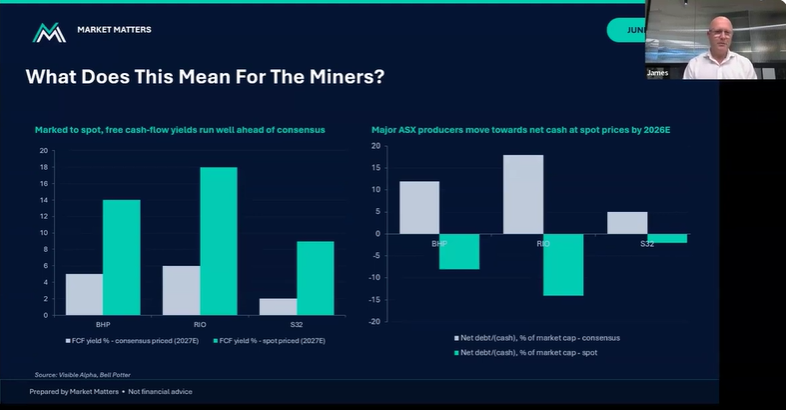
MM’s view: This was a strong result and, importantly, reinforced the evolution of BHP from an iron ore-dominated miner into a much more diversified resources business, with copper increasingly at the centre of the earnings story. The balance sheet remains strong, cash generation was ahead of expectations and the 99c final dividend was a good surprise.
We continue to like BHP’s exposure to copper and the discipline being shown around growth. The organic opportunities look compelling and avoid the risk of overpaying for acquisitions. That said, after a very strong run in the share price, a reasonable amount of the copper optimism is already reflected in the valuation, so we are more likely to trim our overweight position into strength.
MM remains long & bullish BHP
Add To Hit List