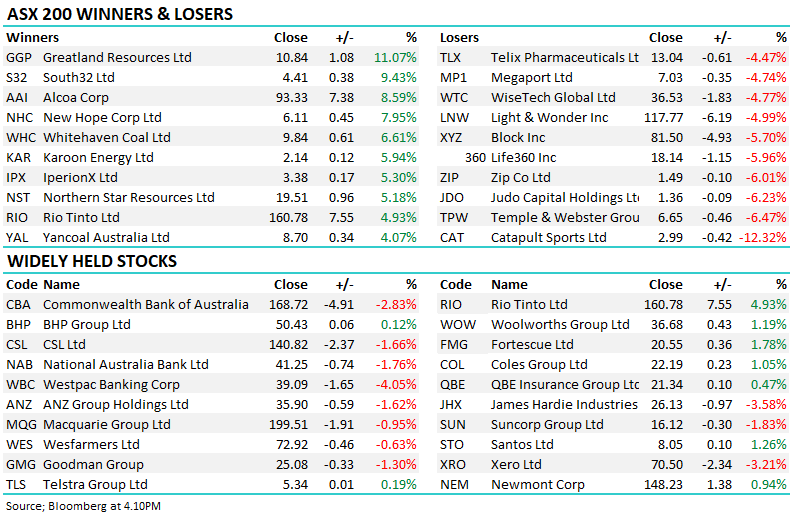
It would have been very easy to change the structure of today’s report with the elevated volatility in many pockets of the ASX but we opted for 4 stocks that we are considering adding to/buying if we see further weakness over the coming weeks although obviously, this list may evolve depending on news flows and the respective performance of stocks we are monitoring closely and holding in our respective portfolios.
The Competition Tribunal gave some early Christmas cheer to Optus while frustrating both TPG Telecom (TPG) and Telstra (TLS) on Wednesday as it upheld the ACCC’s original ruling to block TLS from sharing mobile network infrastructure with TPG. An appeal is still a distinct possibility, especially as building mobile towers in regional Australia is not always commercially viable putting into question whether the consumer will benefit alongside Optus – perhaps they could have allowed it with some strict guidelines skewed in favour of the consumer?
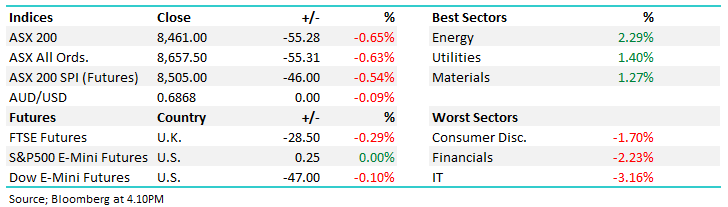
Tuesday saw the ASX200 embrace the balanced RBA minutes advancing almost +0.9% on broad-based gains that saw only 20% of the main board close down on the day. There were a few pockets of weakness on the stock level but as we’ve been saying for weeks the path of least resistance remains on the upside even following weak seasons on overseas bourses. Further stimulus from Beijing and the local market could be testing its all-time in a matter of weeks i.e. it’s less than 4 % away now.
Insurance stocks generally like higher bond yields because they hold collected premiums in bonds garnering interest before paying out on claims as and when required i.e. higher interest rates generate higher income from these funds. Hence the dramatic move in yields over the last 12 months has been a clear tailwind for the sector’s revenue. Also, recently we have seen companies start to demonstrate their pricing power with Insurance Australia Group (IAG), which owns the well-known NRMA, hiking the cost of household insurance by +20% and car insurance by +14% - a touch more than inflation!
The ASX200 finished the shortened week on Friday up +1.8% as the influential Tech, Financial and Materials Sectors all closed up over 3%. China was the catalyst for the miners as they cut rates for the 1st time in 10 months, at MM we have been looking for the Resources Sector to trigger buy signals after analysts have become fixated on a looming recession, this may still unfold if central banks fail to balance their fight against inflation with an economic contraction but China pressing the stimulus button is a huge help for commodities and related stocks. We are bullish on the Resources Sector medium/long term and plan to increase our exposure over the coming months, as opportunities arise.
The ASX200 closed up +0.2% yesterday helped by a firm Banking Sector, the “Big Four” gained an average of +0.6% in a relatively quiet session which saw stocks drift from their highs following strong employment data at 11.30 am – the unemployment rate fell to 3.6% increasing expectations of another rate hike by the RBA. The strong data probably helped support the banks with the 5th pillar Macquarie Group (MQG) leading the charge gaining +2.3%.
Arguably the weak link of the MM Flagship Growth Portfolio through 2023 has been our overweight healthcare exposure i.e. we have 13% in the Healthcare Sector which is above the 10% of the broad index. Hence, if we are overweight a sector that’s not delivering results we must reassess, especially after its largest member and the 3rd largest stock on the ASX suffered a rare negative rerating yesterday.
The elastic band continues to stretch between the top performing tech sector and the underwhelming value names such as banks & resources but as MM has been regularly trotting out the last 12 months has been about the strong getting stronger, and in our opinion, until the world regains confidence that the global economy can avoid a painful recession in today’s new high-interest rate environment, this trend could continue.
Investors and traders alike are going to be bombarded with a plethora of economic news this week, firstly the US CPI (inflation) data is released tonight followed by the latest US Federal Reserve interest rate announcement on Wednesday night while the European Central Bank (ECB) steps up on Thursday followed by the Bank of Japan (BOJ) on Friday, if all goes according to “expectations” the ECB will be the only central bank to hike, or move for that matter, but 2023 has already thrown up plenty of surprises.
The RBA surprise (kind of) rate hike and accompanying hawkish rhetoric have sent Australian 3-year bond yields to decade highs, an unlikely backdrop for a surging tech sector but we cannot argue with the tape – plus we should never forget the new world in which we live where advancing and evolving tech is reshaping business.
The Competition Tribunal gave some early Christmas cheer to Optus while frustrating both TPG Telecom (TPG) and Telstra (TLS) on Wednesday as it upheld the ACCC’s original ruling to block TLS from sharing mobile network infrastructure with TPG. An appeal is still a distinct possibility, especially as building mobile towers in regional Australia is not always commercially viable putting into question whether the consumer will benefit alongside Optus – perhaps they could have allowed it with some strict guidelines skewed in favour of the consumer?
Tuesday saw the ASX200 embrace the balanced RBA minutes advancing almost +0.9% on broad-based gains that saw only 20% of the main board close down on the day. There were a few pockets of weakness on the stock level but as we’ve been saying for weeks the path of least resistance remains on the upside even following weak seasons on overseas bourses. Further stimulus from Beijing and the local market could be testing its all-time in a matter of weeks i.e. it’s less than 4 % away now.
Insurance stocks generally like higher bond yields because they hold collected premiums in bonds garnering interest before paying out on claims as and when required i.e. higher interest rates generate higher income from these funds. Hence the dramatic move in yields over the last 12 months has been a clear tailwind for the sector’s revenue. Also, recently we have seen companies start to demonstrate their pricing power with Insurance Australia Group (IAG), which owns the well-known NRMA, hiking the cost of household insurance by +20% and car insurance by +14% - a touch more than inflation!
The ASX200 finished the shortened week on Friday up +1.8% as the influential Tech, Financial and Materials Sectors all closed up over 3%. China was the catalyst for the miners as they cut rates for the 1st time in 10 months, at MM we have been looking for the Resources Sector to trigger buy signals after analysts have become fixated on a looming recession, this may still unfold if central banks fail to balance their fight against inflation with an economic contraction but China pressing the stimulus button is a huge help for commodities and related stocks. We are bullish on the Resources Sector medium/long term and plan to increase our exposure over the coming months, as opportunities arise.
The ASX200 closed up +0.2% yesterday helped by a firm Banking Sector, the “Big Four” gained an average of +0.6% in a relatively quiet session which saw stocks drift from their highs following strong employment data at 11.30 am – the unemployment rate fell to 3.6% increasing expectations of another rate hike by the RBA. The strong data probably helped support the banks with the 5th pillar Macquarie Group (MQG) leading the charge gaining +2.3%.
Arguably the weak link of the MM Flagship Growth Portfolio through 2023 has been our overweight healthcare exposure i.e. we have 13% in the Healthcare Sector which is above the 10% of the broad index. Hence, if we are overweight a sector that’s not delivering results we must reassess, especially after its largest member and the 3rd largest stock on the ASX suffered a rare negative rerating yesterday.
The elastic band continues to stretch between the top performing tech sector and the underwhelming value names such as banks & resources but as MM has been regularly trotting out the last 12 months has been about the strong getting stronger, and in our opinion, until the world regains confidence that the global economy can avoid a painful recession in today’s new high-interest rate environment, this trend could continue.
Investors and traders alike are going to be bombarded with a plethora of economic news this week, firstly the US CPI (inflation) data is released tonight followed by the latest US Federal Reserve interest rate announcement on Wednesday night while the European Central Bank (ECB) steps up on Thursday followed by the Bank of Japan (BOJ) on Friday, if all goes according to “expectations” the ECB will be the only central bank to hike, or move for that matter, but 2023 has already thrown up plenty of surprises.
The RBA surprise (kind of) rate hike and accompanying hawkish rhetoric have sent Australian 3-year bond yields to decade highs, an unlikely backdrop for a surging tech sector but we cannot argue with the tape – plus we should never forget the new world in which we live where advancing and evolving tech is reshaping business.
Check your email for an email from [email protected]
Subject: Your OTP for Account Access
This email will have a code you can use as your One Time Password for instant access
Verication email sent.
Check your email for an email from [email protected]
Subject: Your OTP for Account Access
This email will have a code you can use as your One Time Password for instant access
!
Invalid One Time Password
Please check you entered the correct info, please also note there is a 10minute time limit on the One Time Passcode
To reset your password, enter your email address
A link to create a new password will be sent to the email address you have registered to your account.
Market Matters members receive daily market reports, real-time trade alerts, full access to 5 portfolios and dynamic company data.
Choose how you'd like to proceed:
We have a range of membership options to suit your needs and budget, why not join today and get unlimited access to the premium Market Matters service.