Most investors are far better buyers than sellers, no great surprise as we are all wired to be emotionally dominated by “Fear & Greed”. However common sense tells us that selling is every bit as important as buying as it plays an equal role in our alternatives at any one time i.e. buy, sell or simply do nothing.
In $US terms gold has corrected almost 10% from its May high as the expected path for interest rates has been pushed out i.e. rates higher for longer. After hiking rates at an unprecedented level over the last year, central banks are clearly committed to quelling inflation and they’re prepared to push the global economy into a recession if required.
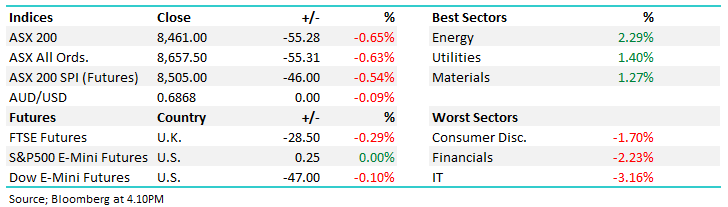
The ASX200 embraced the RBA pause yesterday rallying +0.6% after the announcement on fairly broad-based buying that saw over 70% of the main board close higher, positive sentiment was compounded by a fresh bout of M&A action with Costa Group (CGC) and Austal (ASB) reminding Active Investors like ourselves that stocks will only remain undervalued for so long before the buyers surface. All local stocks need now is further economic stimulus from China and a break out to all-time highs will be back on the table, now less than 5% away.
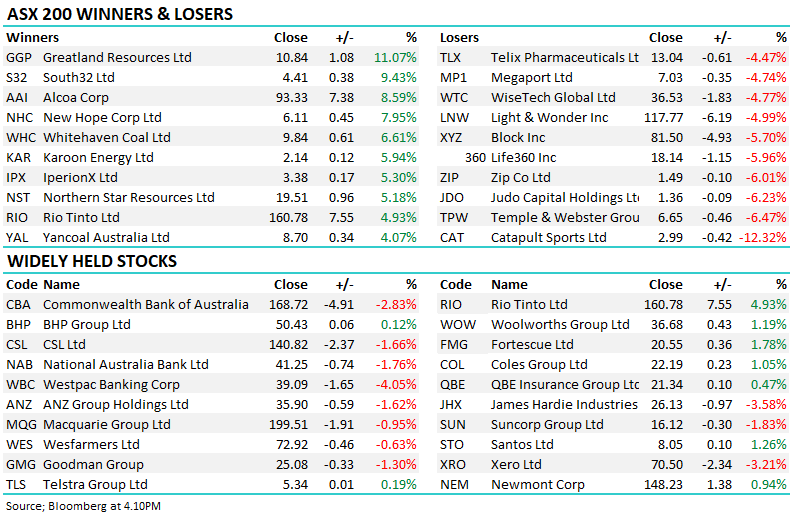
In the 1H of the year investors have been prepared to pay increasingly high prices for earnings certainty, propelling some stocks ever higher, while pushing others, ever lower. At MM we believe a period of performance catch-up is on the menu for some of the more ‘unloved’ names of FY23. When we consider Woolworths (WOW) as an example, it’s easy to comprehend why cautious investors have ploughed funds into this well-managed retailer of necessities that enjoys scale across their supply chain, however, when investor perception does shift, we believe stocks like WOW could be used as ‘funding vehicles’ for a foray up the risk curve.
We are looking forward to the many twists and turns over the next 6 months, so far calendar 2023 has been ok for local investors with the ASX200 eking out a +2.3% gain plus dividends. Equities have ground higher in the face of many headwinds since late 2022 including central banks hiking interest rates far more aggressively than many previously forecasted. A year ago economists were largely calling for the RBA Cash rate to peak around 4%, now there are plenty flagging the 4.85% level. At MM we now believe they’ve become too hawkish and that global bond yields are approaching an inflection point i.e. a top.
The banks are one area of the market which generally likes higher interest rates unless they go too far which leads to bad debts, so far so good in terms of loans but mortgage stress is certainly on the increase as interest rates continue to rise. The next 6 months will tell us how badly the RBA is hurting the average Australian, especially with more hikes likely in the coming months, as we said earlier MM believes the pain is around the corner and the local economy is about to slow significantly if nothing else due to the uncertainty of what comes next in 2024.
One good figure obviously doesn’t mean its time to restructure portfolios but market moves such as Wednesdays should remind investors that the market is very skewed toward interest rates being higher for longer and the Australian consumer struggling at least well into 2024 but as we said yesterday “stock markets form bottoms, on both the index and sector level, when things look their worst”. Yesterday may not prove to be the ultimate inflexion point but it has made us consider that the “strong getting stronger” can only last for so long before stocks/sectors that have been out of favour will inevitably play some performance catch-up.
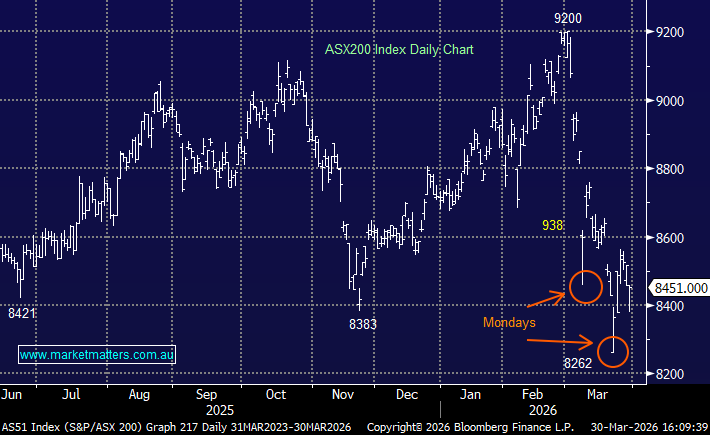
With only 3 trading days remaining of FY23 the ASX200 is sitting up around +8% plus dividends, it certainly hasn’t felt like a standard solid year but when we stand back and look at the chart of the index it’s actually rotated in a fairly tight band for the last 2.5 years – as we keep trumpeting all of the action is unfolding on the stock and sector level.
MTS beat estimates yesterday sending the stock up +4.7% in the process, the full-year results were solid and slightly ahead of our expectations. The underlying profit of $307.5 million was up 2.6% YoY while the FY dividend of 22.5c fully franked was also better than expected (21.2c) which puts it on a yield of ~6% based on Monday’s close. However, it was the comments from Metcash chief executive Doug Jones that caught our attention, especially when we consider discretionary spending.
Over the last few months, MM forecasted that the next market cycle would be one of the increased recession fears and the likes of the RBA, FED and BOE are certainly delivering. We believe the value-growth elastic band has further to stretch although we believe its too mature to chase at current levels i.e. tech stocks can continue to outperform the likes of resources but it’s now likely to be caused by pockets of weakness in the miners as opposed to ongoing runaway strength in tech.
In $US terms gold has corrected almost 10% from its May high as the expected path for interest rates has been pushed out i.e. rates higher for longer. After hiking rates at an unprecedented level over the last year, central banks are clearly committed to quelling inflation and they’re prepared to push the global economy into a recession if required.
The ASX200 embraced the RBA pause yesterday rallying +0.6% after the announcement on fairly broad-based buying that saw over 70% of the main board close higher, positive sentiment was compounded by a fresh bout of M&A action with Costa Group (CGC) and Austal (ASB) reminding Active Investors like ourselves that stocks will only remain undervalued for so long before the buyers surface. All local stocks need now is further economic stimulus from China and a break out to all-time highs will be back on the table, now less than 5% away.
In the 1H of the year investors have been prepared to pay increasingly high prices for earnings certainty, propelling some stocks ever higher, while pushing others, ever lower. At MM we believe a period of performance catch-up is on the menu for some of the more ‘unloved’ names of FY23. When we consider Woolworths (WOW) as an example, it’s easy to comprehend why cautious investors have ploughed funds into this well-managed retailer of necessities that enjoys scale across their supply chain, however, when investor perception does shift, we believe stocks like WOW could be used as ‘funding vehicles’ for a foray up the risk curve.
We are looking forward to the many twists and turns over the next 6 months, so far calendar 2023 has been ok for local investors with the ASX200 eking out a +2.3% gain plus dividends. Equities have ground higher in the face of many headwinds since late 2022 including central banks hiking interest rates far more aggressively than many previously forecasted. A year ago economists were largely calling for the RBA Cash rate to peak around 4%, now there are plenty flagging the 4.85% level. At MM we now believe they’ve become too hawkish and that global bond yields are approaching an inflection point i.e. a top.
The banks are one area of the market which generally likes higher interest rates unless they go too far which leads to bad debts, so far so good in terms of loans but mortgage stress is certainly on the increase as interest rates continue to rise. The next 6 months will tell us how badly the RBA is hurting the average Australian, especially with more hikes likely in the coming months, as we said earlier MM believes the pain is around the corner and the local economy is about to slow significantly if nothing else due to the uncertainty of what comes next in 2024.
One good figure obviously doesn’t mean its time to restructure portfolios but market moves such as Wednesdays should remind investors that the market is very skewed toward interest rates being higher for longer and the Australian consumer struggling at least well into 2024 but as we said yesterday “stock markets form bottoms, on both the index and sector level, when things look their worst”. Yesterday may not prove to be the ultimate inflexion point but it has made us consider that the “strong getting stronger” can only last for so long before stocks/sectors that have been out of favour will inevitably play some performance catch-up.
With only 3 trading days remaining of FY23 the ASX200 is sitting up around +8% plus dividends, it certainly hasn’t felt like a standard solid year but when we stand back and look at the chart of the index it’s actually rotated in a fairly tight band for the last 2.5 years – as we keep trumpeting all of the action is unfolding on the stock and sector level.
MTS beat estimates yesterday sending the stock up +4.7% in the process, the full-year results were solid and slightly ahead of our expectations. The underlying profit of $307.5 million was up 2.6% YoY while the FY dividend of 22.5c fully franked was also better than expected (21.2c) which puts it on a yield of ~6% based on Monday’s close. However, it was the comments from Metcash chief executive Doug Jones that caught our attention, especially when we consider discretionary spending.
Over the last few months, MM forecasted that the next market cycle would be one of the increased recession fears and the likes of the RBA, FED and BOE are certainly delivering. We believe the value-growth elastic band has further to stretch although we believe its too mature to chase at current levels i.e. tech stocks can continue to outperform the likes of resources but it’s now likely to be caused by pockets of weakness in the miners as opposed to ongoing runaway strength in tech.
Check your email for an email from [email protected]
Subject: Your OTP for Account Access
This email will have a code you can use as your One Time Password for instant access
Verication email sent.
Check your email for an email from [email protected]
Subject: Your OTP for Account Access
This email will have a code you can use as your One Time Password for instant access
!
Invalid One Time Password
Please check you entered the correct info, please also note there is a 10minute time limit on the One Time Passcode
To reset your password, enter your email address
A link to create a new password will be sent to the email address you have registered to your account.
Market Matters members receive daily market reports, real-time trade alerts, full access to 5 portfolios and dynamic company data.
Choose how you'd like to proceed:
We have a range of membership options to suit your needs and budget, why not join today and get unlimited access to the premium Market Matters service.