Fed Chair Jerome Powell delivered a dovish testimony overnight, warning of the dangers of keeping interest rates too high for too long: “Reducing policy restraint too late or too little could unduly weaken economic activity and employment” and “More good data would strengthen our confidence that inflation is moving sustainably toward 2 per cent.” With the US June CPI set for release on Thursday and PPI on Friday, the groundwork has been laid for rate cuts into Christmas.
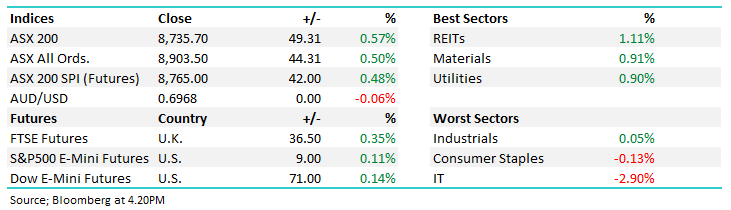
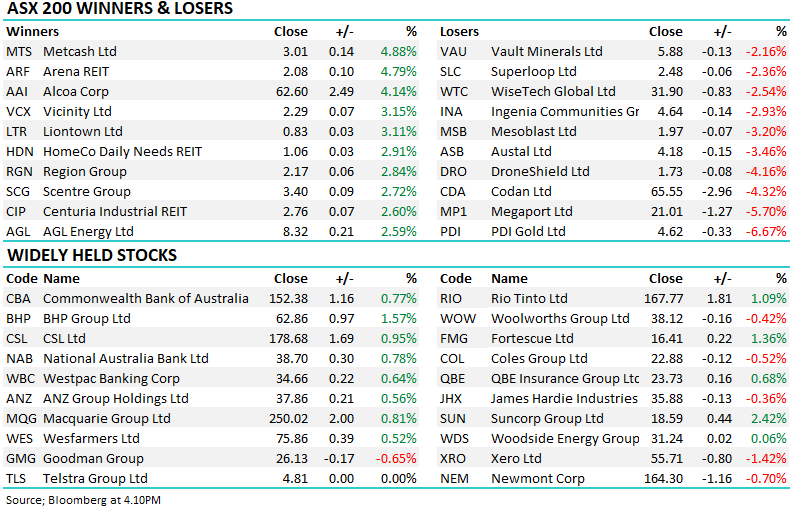
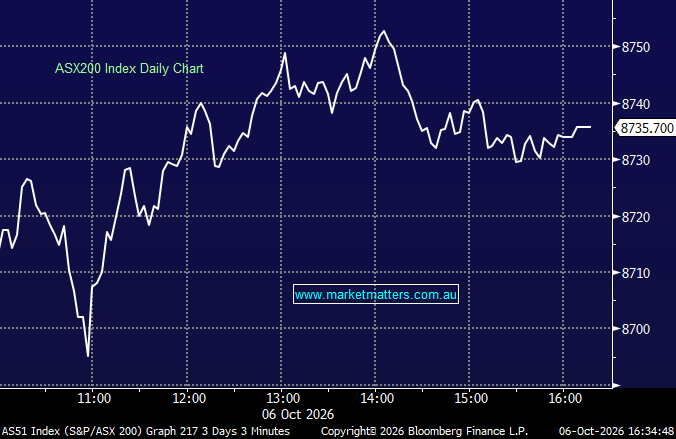
The ASX200 started the week in poor fashion, following S&P500 futures lower throughout the day in anticipation of a weak opening by Europe following the surprise French election result. Last week, markets were concerned about Le Pen, but as the results rolled in on Sunday, concerns migrated towards potential reckless spending by the victorious Left, i.e. the market interpretation being that it’s good news the Far Right lost but bad news the Far Left won. Ultimately though, moves across financial markets have been relatively muted on the view that political gridlock may at least limit the ability of the Left to enact its big-spending plans.
Friday’s US jobs data showed further signs of an easing labour market, which adds additional support to the case for the FOMC to begin cutting interest rates over the next few months – the futures market is anticipating the first cut in September. The action under the surface of the US bond market is an interesting one, with the gap between the 2s and 10s steepening to almost 20bps as markets price in more issuance down the track to pay for the likely increased spending of whoever wins the November election
The UK election looks already done and dusted, a relatively clear affair with Labour poised to return to power after 14 years in the wilderness. However, the French election on Sunday is still a close call. Recent polls suggest Marine Le Pen will be short of the numbers to achieve a majority, in line with our thoughts over recent weeks, and European bourses rallied accordingly.
Overnight, European bourses improved ahead of Sunday's French election, with the French CAC 40 closing up +1.2%. At the same time, US indices posted fresh all-time highs in a shortened session ahead of Independence Day. US bond yields fell after weaker-than-expected economic data reinforced the case for the Fed to start cutting rates this year as “bad news remains good news“ for equities – the data showed the US services sector contracted at the fastest pace in four years. The S&P 500 has added more than $16 trillion in value from a closing low in October 2022, thanks to solid earnings, the spectacular surge in artificial intelligence and expectations that interest rates will drop.
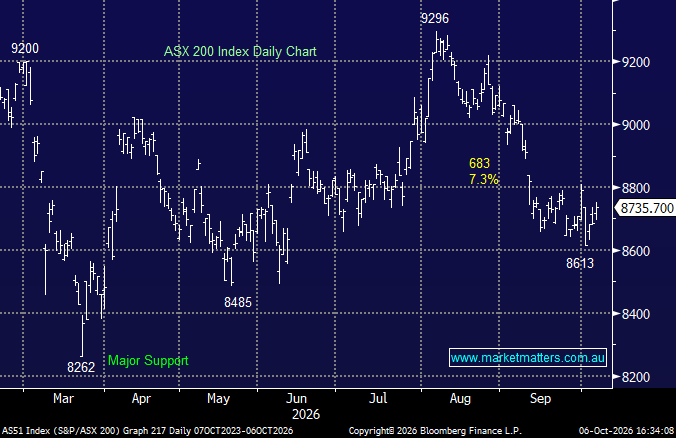
The ASX200 drifted lower on Tuesday, ending the session down -0.4%. Investors found the sidelines the most appealing option ahead of the US Jobs Report on Friday, after Independence Day on Thursday, and the troublesome French election looming on Sunday. Over 60% of the main board fell on the second day of the new FY, with only the Energy Sector offering some bullish resistance. However, losses were limited outside of the lithium (Li) stocks – we will look at these further later on.
The ASX200 started the week in stoic fashion on Monday, reclaiming over 70% of early morning losses to end the first day of July down -0.2%. It was a rare session for 2024 when the miners were the backbone of the index while the banks, tech, retail, and real estate stocks were the weak links. However, with FY25 only one day old, we’re not paying any attention to stock/sector rotation. Locally, the economic data remains tepid at best, which might help the RBA resist calls for a rate hike in August:
The last six months have been an obvious “game of two halves,” that the US Value and Growth Indices illustrate perfectly; the Growth Index has surged over +23%, while the Value Index has edged up just +4.5%, and the broad-based S&P500 signed out to the first half of 2024 up +14.5%. The growth stocks benefitted from the boom in AI and the accompanying surge by the “Super Six,” whereas the Value Index was weighed down by a heavy Materials Sector. However, there's not a lot of money to make focusing on the last six months; we need to look forward to what comes next. First, here are some interesting statistics which aren’t exciting for the swelling number of bears.
Today is the final day of FY24. The ASX200 has advanced almost 8%, which translates to above 13% inclusive of dividends. It hasn’t felt that strong since March, but the numbers don’t lie. However, under the hood, it has very much been a game of two halves, with investors pushing winners and valuations ever higher while stocks residing in the “naughty corner” have found it very hard to escape; some examples of performance in FY illustrate the significant polarisation of performance and as we said yesterday, why we love equities, and Active Investing
The hot CPI print on Wednesday caught the market's napping. Expectations were for 3.8% Year-on-Year (YoY), but unfortunately, it came in at 4.0%. The ramifications for most Australians and equities were clearly on display after the 11.30am data. While the monthly numbers don’t include all components and the RBA gives more weight to the quarterly print, the increase from April's 3.6% suggests inflation is frustratingly still “sticky” after three consecutive months of upward pressure; concerns are growing that a 14th rate hike by the RBA is nigh.
The ASX200 started the week in poor fashion, following S&P500 futures lower throughout the day in anticipation of a weak opening by Europe following the surprise French election result. Last week, markets were concerned about Le Pen, but as the results rolled in on Sunday, concerns migrated towards potential reckless spending by the victorious Left, i.e. the market interpretation being that it’s good news the Far Right lost but bad news the Far Left won. Ultimately though, moves across financial markets have been relatively muted on the view that political gridlock may at least limit the ability of the Left to enact its big-spending plans.
Friday’s US jobs data showed further signs of an easing labour market, which adds additional support to the case for the FOMC to begin cutting interest rates over the next few months – the futures market is anticipating the first cut in September. The action under the surface of the US bond market is an interesting one, with the gap between the 2s and 10s steepening to almost 20bps as markets price in more issuance down the track to pay for the likely increased spending of whoever wins the November election
The UK election looks already done and dusted, a relatively clear affair with Labour poised to return to power after 14 years in the wilderness. However, the French election on Sunday is still a close call. Recent polls suggest Marine Le Pen will be short of the numbers to achieve a majority, in line with our thoughts over recent weeks, and European bourses rallied accordingly.
Overnight, European bourses improved ahead of Sunday's French election, with the French CAC 40 closing up +1.2%. At the same time, US indices posted fresh all-time highs in a shortened session ahead of Independence Day. US bond yields fell after weaker-than-expected economic data reinforced the case for the Fed to start cutting rates this year as “bad news remains good news“ for equities – the data showed the US services sector contracted at the fastest pace in four years. The S&P 500 has added more than $16 trillion in value from a closing low in October 2022, thanks to solid earnings, the spectacular surge in artificial intelligence and expectations that interest rates will drop.
The ASX200 drifted lower on Tuesday, ending the session down -0.4%. Investors found the sidelines the most appealing option ahead of the US Jobs Report on Friday, after Independence Day on Thursday, and the troublesome French election looming on Sunday. Over 60% of the main board fell on the second day of the new FY, with only the Energy Sector offering some bullish resistance. However, losses were limited outside of the lithium (Li) stocks – we will look at these further later on.
The ASX200 started the week in stoic fashion on Monday, reclaiming over 70% of early morning losses to end the first day of July down -0.2%. It was a rare session for 2024 when the miners were the backbone of the index while the banks, tech, retail, and real estate stocks were the weak links. However, with FY25 only one day old, we’re not paying any attention to stock/sector rotation. Locally, the economic data remains tepid at best, which might help the RBA resist calls for a rate hike in August:
The last six months have been an obvious “game of two halves,” that the US Value and Growth Indices illustrate perfectly; the Growth Index has surged over +23%, while the Value Index has edged up just +4.5%, and the broad-based S&P500 signed out to the first half of 2024 up +14.5%. The growth stocks benefitted from the boom in AI and the accompanying surge by the “Super Six,” whereas the Value Index was weighed down by a heavy Materials Sector. However, there's not a lot of money to make focusing on the last six months; we need to look forward to what comes next. First, here are some interesting statistics which aren’t exciting for the swelling number of bears.
Today is the final day of FY24. The ASX200 has advanced almost 8%, which translates to above 13% inclusive of dividends. It hasn’t felt that strong since March, but the numbers don’t lie. However, under the hood, it has very much been a game of two halves, with investors pushing winners and valuations ever higher while stocks residing in the “naughty corner” have found it very hard to escape; some examples of performance in FY illustrate the significant polarisation of performance and as we said yesterday, why we love equities, and Active Investing
The hot CPI print on Wednesday caught the market's napping. Expectations were for 3.8% Year-on-Year (YoY), but unfortunately, it came in at 4.0%. The ramifications for most Australians and equities were clearly on display after the 11.30am data. While the monthly numbers don’t include all components and the RBA gives more weight to the quarterly print, the increase from April's 3.6% suggests inflation is frustratingly still “sticky” after three consecutive months of upward pressure; concerns are growing that a 14th rate hike by the RBA is nigh.
Check your email for an email from [email protected]
Subject: Your OTP for Account Access
This email will have a code you can use as your One Time Password for instant access
Verication email sent.
Check your email for an email from [email protected]
Subject: Your OTP for Account Access
This email will have a code you can use as your One Time Password for instant access
!
Invalid One Time Password
Please check you entered the correct info, please also note there is a 10minute time limit on the One Time Passcode
To reset your password, enter your email address
A link to create a new password will be sent to the email address you have registered to your account.
Market Matters members receive daily market reports, real-time trade alerts, full access to 5 portfolios and dynamic company data.
Choose how you'd like to proceed:
We have a range of membership options to suit your needs and budget, why not join today and get unlimited access to the premium Market Matters service.