Hi Glenn,
You’ve definitely got the gist of our thinking toward uranium and nuclear power although there are a few moving parts in the equation:
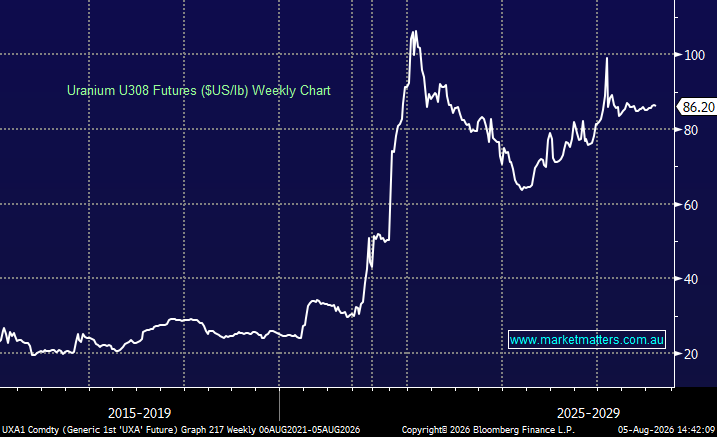
The uranium bull case remains intact, but the supply side is more complex than a simple “shortage” narrative. Kazakhstan remains the key swing factor, accounting for around 40-45% of global mine supply, with any indication that Kazatomprom will increase production posing the biggest downside risk to prices. Several idled mines are progressing toward restarts, permitting delays, capital requirements and operational constraints mean new supply is likely to emerge gradually rather than flood the market. Conversion and enrichment capacity also remain critical bottlenecks, reinforcing that mined uranium is only one part of the nuclear fuel chain.
At the same time, the demand backdrop continues to strengthen as political support for nuclear power broadens. Countries including Italy, Denmark and Japan are moving towards expanding or restarting nuclear generation, while the US is accelerating approvals and South Korea continues to back the sector.
- The anti-nuclear sentiment that dominated post-Fukushima is structurally weakening, though pockets of resistance remain, including in Australia.
However, uranium equities are often driven as much by market sentiment as fundamentals. The spot market is thin and heavily influenced by financial buyers such as the Sprott Physical Uranium Trust, whereas utilities typically contract in the longer-term market.
- Hence, spot prices can diverge materially from underlying utility demand, creating periods of sharp volatility – as we’ve seen!
The disconnect between a constructive long-term outlook and relatively subdued equity performance largely comes down to timing. Most forecasts place the structural uranium supply deficit closer to 2028-2032 rather than today, meaning investors have periodically lost patience after pricing the story in early. The sector has also become increasingly tied to AI-related power demand expectations, making uranium stocks vulnerable to swings in AI sentiment that have little to do with nuclear fundamentals.
- In our opinion the long-term thesis remains compelling, but investors should expect a volatile path as speculative flows, geopolitical risks and production decisions continue to dominate shorter-term price action.