Hi Andrew,
There are a few different ways of protecting a portfolio, four of which we have covered below, they all have different foundation at various times:
ASX-Listed Inverse ETFs — The Simple Hedge, the ETFs rise when markets fall, and vice-versa:
- BBOZ — geared short ASX 200.
- BBUS — geared short US market (S&P 500).
- BEAR — unleveraged short ASX 200.
They can work well as short-term protection during market selloffs, but there’s an important catch — these are daily reset products, meaning performance erodes over time due to market volatility and compounding. In simple terms, they’re useful tactical hedges for days or weeks, not ideal long-term portfolio insurance.
Put Options — Targeted Downside Protection which give investors the right to sell shares at a fixed price, helping protect against large falls. They can also be used on indices:
The advantages:
- Protection is targeted to specific stocks or the broader market.
- The maximum cost is limited to the upfront premium paid.
- Small amounts of capital can provide meaningful downside cover.
The downside is complexity — options require a better understanding of strike prices, expiry dates and pricing. They are a decaying asset which will hinder portfolio returns unless market timing is good.
Cash — The Simplest Hedge. Sometimes the best protection is simply holding more cash. Raising cash reduces portfolio risk immediately, involves almost no fees or decay, and gives investors flexibility to buy quality assets during market weakness. Many professional investors use elevated cash levels as a defensive strategy when markets appear stretched.
Defensive Sector Rotation – Another simple strategy is rotating into traditionally defensive sectors during uncertain periods, including:
- Consumer staples
- Utilities
- Infrastructure
These sectors tend to hold up better during economic slowdowns because demand for their products and services is generally more stable regardless of market conditions but it’s far from a perfect science as we’ve witnessed over recent years, i.e. Healthcare would have been included in many peoples list a few years ago, a move that would have destroyed value.
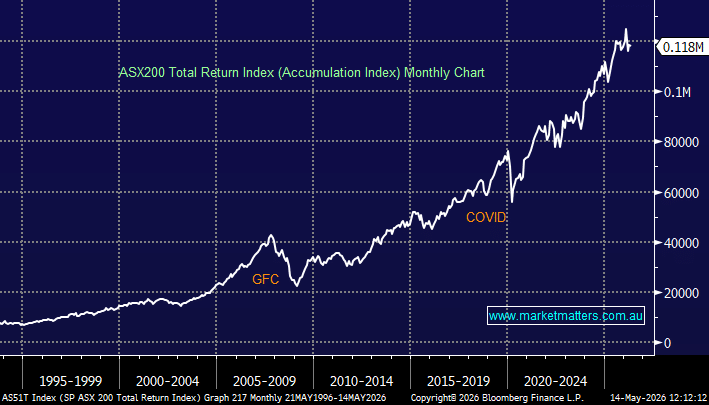
At MM we tend to “Keep it Simple, Stupid” and increase cash levels when we want to move down the risk curve, but we are conscious that markets appreciate over time, so we rarely adopt such positions for too long, i.e. Since 2000, the ASX 200 has delivered an average annual return of ~10% including dividends, there have been 4 decent corrections during that time, or one per ~6 years making timing far from easy.
Generally, most institutional investors (that employ hedging) will use derivatives (options or futures) as their primary mechanism.