The Nasdaq Composite fell ~1.9% on Monday, its biggest one-day decline since late June, as investors were hit by a combination of renewed AI concerns and escalating geopolitical tensions. The initial catalyst came from Asia, where SK Hynix plunged 15.4% in Seoul, its worst session in 18 years, triggering a broader semiconductor sell-off. US-listed SK Hynix fell -9%, while Micron (-5%), Sandisk (-8%) and Intel (-4.1%) also declined sharply. The selling extended to the Roundhill Memory ETF (DRAM), which entered bear market territory after falling almost 30% from its late-June peak, highlighting how quickly sentiment has turned in one of this year’s hottest AI trades.
Additionally, the news from the Middle East sent crude oil surging almost 10% to above US$83/barrel, reigniting inflation concerns just as Fed Governor Christopher Waller warned further rate hikes may be needed if underlying price pressures persist. Treasury yields rose across the curve, with markets moving to fully price a 0.25% September rate hike and assigning around a 50% probability of action as early as July. Attention now turns to tonight’s US June inflation report, with inflation likely to determine whether Monday’s sell-off proves a temporary setback or the start of a broader risk-off move as the hawks take control Expectations are for a fall in inflation (the first time since the pandemic) courtesy of lower fuel prices during the month, but the reacceleration in Oil prices since will probably have markets look through a softer print.
-
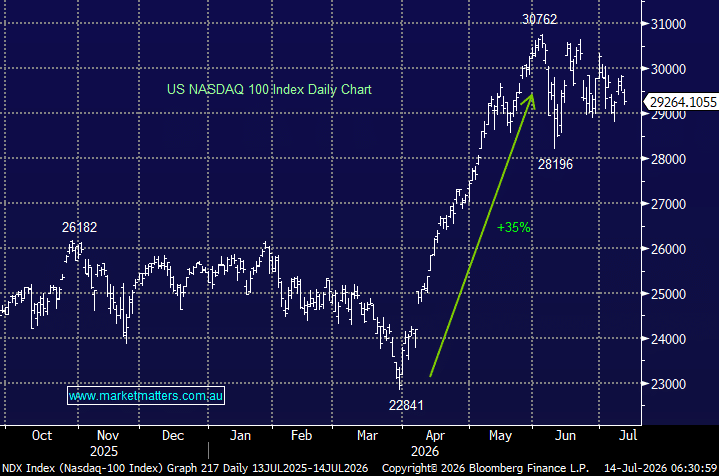
We can see the NASDAQ continuing to consolidate until we see a clean resolution to the Middle East conflict.
MM remains bullish towards the NASDAQ around 29000
Add To Hit List