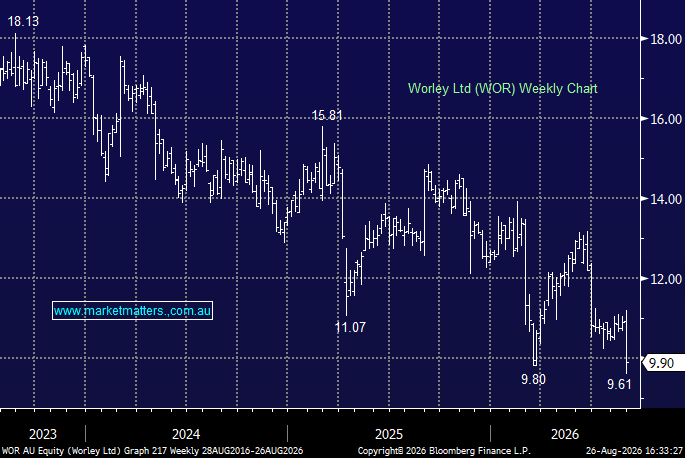
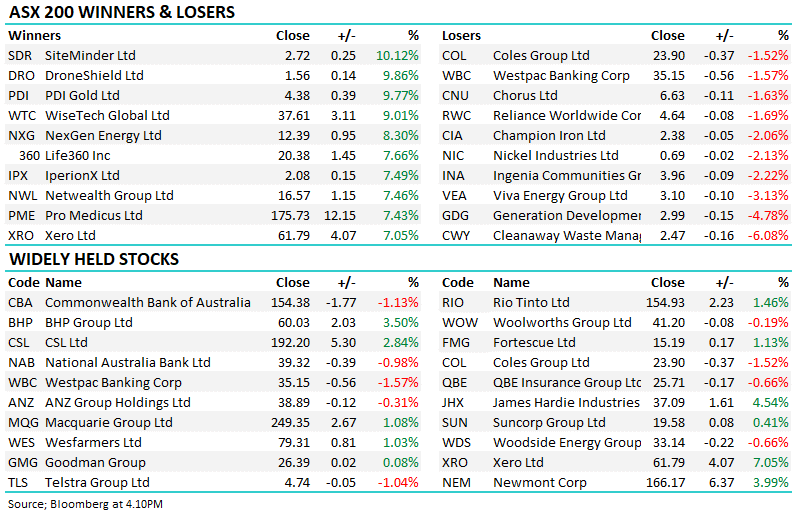
WOR -10.81%: FY26 numbers were broadly around the mark operationally, but management guided to only mid-to-high single-digit revenue and EBITA growth in FY27, well short of the ~15% growth embedded in consensus expectations. Add questions around backlog conversion, disruption in the Middle East and it was easy to see why the shares took a hit to reset expectations.
Key results:
- Aggregated revenue of A$12.02bn, slightly ahead of A$11.87bn expected.
- Earnings (EBITA) of A$734m, down 11% and below ~A$770m consensus.
- Net profit (NPATA) of A$395m, down 17% and below ~A$372m consensus.
- Statutory net profit of A$238m, versus A$315.3m expected.
- Final dividend of 25cps.
- FY27 revenue and underlying EBITA growth guided to mid-to-high single digits.
There is still plenty of work around. FY26 bookings increased 23% to A$15.5bn and the factored sales pipeline grew 24%, with particularly healthy opportunities in North America and EMEA. The problem is timing. Middle East conflict has delayed project starts and created second-order supply-chain disruption, and management only expects regional activity to improve in the second half.
MM’s view: This is an expectations problem as much as an operational one, but a 15% consensus growth assumption colliding with mid-to-high single-digit guidance is always going to hurt. We like WOR’s exposure to global energy and infrastructure investment, and bookings suggest demand hasn’t disappeared, but investors need evidence that the pipeline can actually convert into revenue and earnings. At around 11x FY27 consensus earnings following the sell-off, the stock screens cheap. However, this result has exposed question marks around FY27 execution, and combined with a volatile geopolitical backdrop has us questioning our WOR position in the Active Growth Portfolio.
MM is long but cautious toward WOR
Add To Hit List