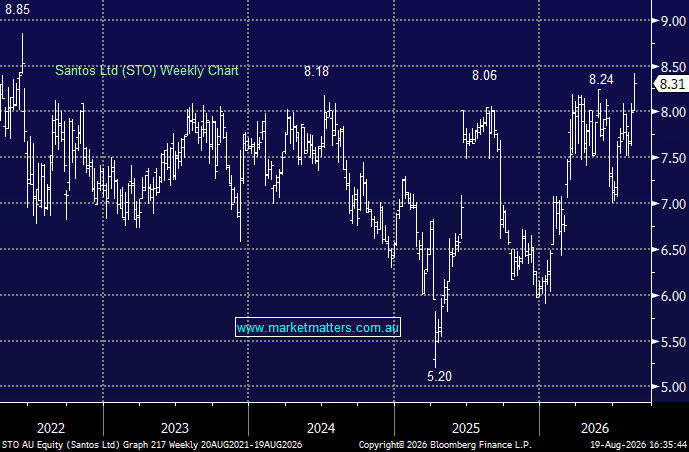
STO +2.47%: delivered a mixed headline 1H26 result, but the underlying operational picture was better than the statutory numbers suggest, with earnings (EBITDAX) ahead of consensus, a healthy dividend and FY26 guidance maintained. The shares rallied as investors focused on improving execution at Barossa and the prospect that STO is approaching the point where major growth-project spending rolls over and debt reduction becomes the priority.
Key results:
- EBITDAX of US$1.56bn, down 12% but ~4% ahead of US$1.50bn expected.
- Underlying profit of US$397m, down 22% and below Bloomberg consensus of US$485m.
- Net profit of US$355m, down 19% versus US$525m expected.
- Free cash flow of US$378m, down 65%, impacted by commissioning and cargo timing effects expected to unwind in 2H.
- Unit production costs of US$7.53/boe.
- Interim dividend of US11.6cps.
FY26 guidance was maintained, including production of 99–105mmboe and capex of US$1.95–2.15bn. The more important story is increasingly the balance sheet and growth portfolio. Barossa is maintaining its targeted eight-day LNG cargo cadence, Papua LNG remains on track for an FID in 4Q26 with at least 60% project financing targeted, while Santos aims to reduce net debt by US$2.5bn by 2030.
MM’s view: STO has spent years asking investors to be patient while it poured capital into growth projects; we’re finally approaching the point where that patience should start being rewarded with cash flow. The story is clearly improving as Barossa delivers and operational execution strengthens. The share price and cash generation are still heavily influenced by oil prices remaining elevated, which is an evolving dynamic given events in the Middle East. If a resolution comes sooner rather than later and oil prices ease, the combination of ongoing capex requirements and lower commodity prices could push meaningful debt reduction and increased shareholder returns further out. For now, we’re encouraged by the execution, but the path from project delivery to materially higher shareholder returns isn’t quite as straightforward as the improving operational picture might suggest.
MM remains neutral toward STO
Add To Hit List