Hi David,
These are structured products that owns bank bonds then sell options on the underlying basket of shares to juice up the returns. As it stands, tier 2 bank bonds are yielding ~6.2%, so added risk is taken via the structuring of the product to improve the returns.
Importantly, a Fixed Coupon Note is not simply a higher-yielding bank bond. It is a structured product combining:
- an unsecured debt obligation issued by an investment bank; and
- an embedded equity derivative linked to the nominated bank shares.
The elevated coupon is funded largely by the investor effectively selling put-options over the underlying shares. In practical terms, the investor is being paid to accept the risk that one of the nominated bank shares suffers a substantial decline.
These notes a linked to the basket of shares, but the diversification can be misleading. The final outcome is usually determined by the worst-performing share in the basket, rather than the average performance of all five banks.
For example, CBA, NAB, ANZ and Westpac could all perform reasonably well, but if Macquarie falls heavily, Macquarie may determine the capital repayment. This makes the note only as strong as its weakest underlying share.
This then brings up the question, what does a 40% barrier actually mean?
A 40% downside barrier usually means the relevant share can fall to 60% of its initial price without triggering a capital loss under the note’s repayment formula. However, the barrier is normally a trigger rather than a buffer. It does not necessarily mean the investor’s maximum loss is limited to 40%.
Assume a note is issued at $100 and the worst-performing bank share is down 45% at maturity:
- the 40% barrier has been breached;
- the investor may receive only $55 of principal back;
- the investor has therefore suffered the full 45% decline in the underlying share, although coupons received would partially offset the loss.
Similarly, if the worst-performing share falls 70%, the investor may receive only $30 of the original $100 investment.
Some notes test the barrier only on the maturity date, while others monitor it continuously or at specified observation dates. This distinction is extremely important and should be checked in the term sheet.
In normal or moderately weak markets, a Fixed Coupon Note may appear more stable than a bank hybrid because the investor continues receiving the coupon and the bank shares can decline materially without affecting the scheduled repayment.
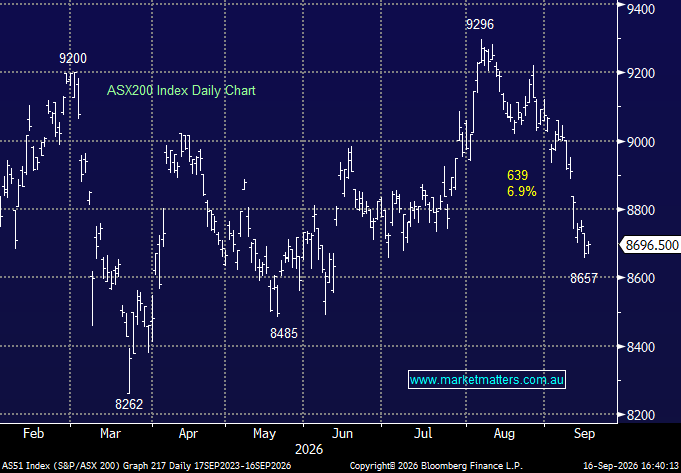
However, in a severe equity-market decline, the result can change quickly. A basket of major Australian banks is highly correlated. During a recession, credit crisis, housing downturn or regulatory shock, several bank shares could decline together. A 40% barrier may look distant today, but barriers are most likely to be breached at the time when liquidity is poor, volatility is high and investors are least comfortable taking equity losses. The note can therefore behave like a bond most of the time but become an equity investment after a large fall.
That asymmetric profile is what funds the 9–10% coupon.
Before investing, consider these points;
- Is the barrier tested continuously or only at maturity?
- Is repayment based on the worst-performing share?
- Are coupons unconditional, or can they be deferred or cancelled?
- Can the issuer redeem the note early if the shares perform well?
- What happens following a takeover, capital raising, demerger or other corporate event?
- Who is the issuing bank and what is its credit quality?
- Is there a secondary market, and what costs apply if the investor exits early?
- Are adviser commissions or structuring margins embedded in the issue price?
- Are dividends and franking credits from the underlying bank shares forgone?
Structured note investors also carry the credit risk of the issuer and may face limited liquidity and opaque secondary-market pricing. These are complex products that look good on the surface, but have a lot of conditions within them.
They can play a role for sophisticated investors who understand the derivative structure, are comfortable owning the worst-performing bank share after a major fall and can hold the note to maturity. However, we would not regard a 40% barrier as equivalent to having only 40% downside protection. The investor is effectively accepting potentially substantial equity-market losses beyond the barrier, while receiving none of the upside or dividends from the underlying bank shares.
In risk terms, we would generally rank them:
- Riskier than senior bank bonds
- Riskier than most diversified investment-grade bond funds
- Potentially comparable with bank hybrids in broad risk appetite, but with a very different loss mechanism
- Capable of producing materially larger losses than a hybrid if the worst-performing bank share finishes substantially below its barrier.