Hi Narayanan,
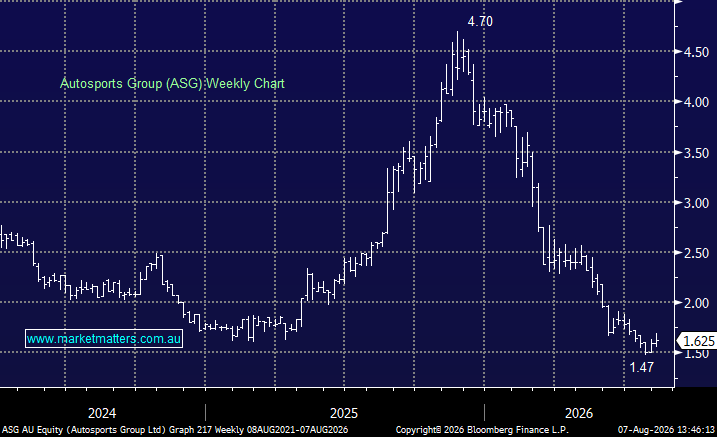
ASG has been a persistent underperformer driven overwhelmingly by earnings downgrades over the past three years, with almost every result accompanied by lower earnings forecasts. The sharpest reset came after FY24 as new vehicle margins normalised from post-COVID highs, followed by weaker vehicle volumes, rising operating costs and softer FY26 guidance.
Several structural headwinds compounded the pressure. As vehicle supply recovered, dealers lost the pricing power that had boosted margins during the pandemic. At the same time, ASG continued expanding through acquisitions, increasing integration costs and debt, while delays in EV deliveries pushed revenue recognition into future periods despite a record order book. New ACCC merger rules have also added friction to the company’s acquisition-led growth strategy.
The forward P/E has actually expanded from around 6x to 7.7x, suggesting investors still expect/hope earnings to recover. We can see FY27 being the beginning of a recovery as margins normalise, acquisitions mature and EV deliveries improve but we would rather buy at higher levels having seen some constructive earnings improvement.
The YMAX ETF provides exposure to Australia’s 20 largest blue-chip companies and aims to generate enhanced quarterly income through an options strategy. While it has delivered steady income since launching in 2012, its total returns have trailed the broader market.
- We are not fans of YMAX. The 0.69% management is okay for the strategy employed, but the covered call option overlay limits capital upside during strong bull markets, contributing to its long-term underperformance versus a broad market ETF.
Until we turn neutral/bearish towards the ASX we will prefer the IHD and VHY ETFs for yield, both are straightforward dividend-tilted Australian equity ETFs with no options overlay, meaning they’ve captured the full benefit of the ASX’s strong 3-year bull run.