Skip to Content
scroll

The bond super cycle

Our Q&As are emailed in our Saturday Morning Report, find the answer to this question below.

The Latest Q&A

Question asked

The bond super cycle

In his Livewire article, Shane Oliver argues that the long-term trend in global bond yields reversed in 2020 with a multi-decade super-cycle bear market driven by structural inflation pressures, expanding government debt, and a resurgence of "bond vigilantes." This shift toward higher yields reduces the tailwinds enjoyed by risk assets and traditional growth strategies, with lower real returns and increased volatility across most asset classes. Given the structural shift into a long-term bond bear market driven by rising government debt, sticky inflation, supply chain de-globalisation, increasing inequality and populist insurgencies, as well as escalating geopolitical tensions, how is MM positioning its portfolios to navigate these macro headwinds? Considering these macro realities, if you had to commit to just one of your model portfolios to navigate this environment over the coming 3-5 years, which one would it be and why?
Answer

Hi Nick,

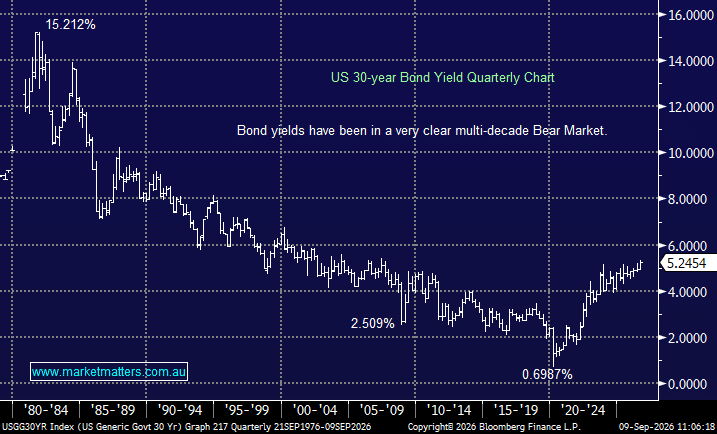
As the chart below illustrates US bond yields, similar to our own, we’ve been in a clear bear market since the 1980’s before the bounce following the panic COVID sell-off that saw the Fed Funds Rate hit a target band of 0-0.25%, while at the same unprecedented time we saw some countries’ bond yields incredulously trade into negative territory.

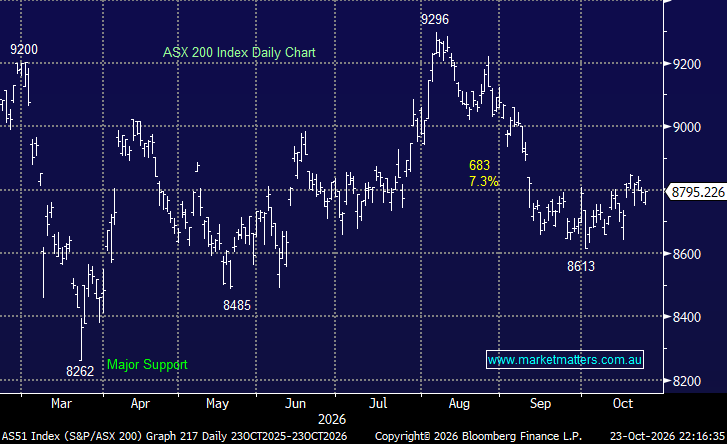
During this same post-COVID fall in bonds (yields higher), the ASX 200 more than doubled, illustrating that higher yields don’t necessarily mean lower share prices. However, the real action unfolded on the stock & sector level:

  • Outperformers: Materials, Financials and Utilities.
  • Underperformers: Healthcare, Real Estate and Tech.

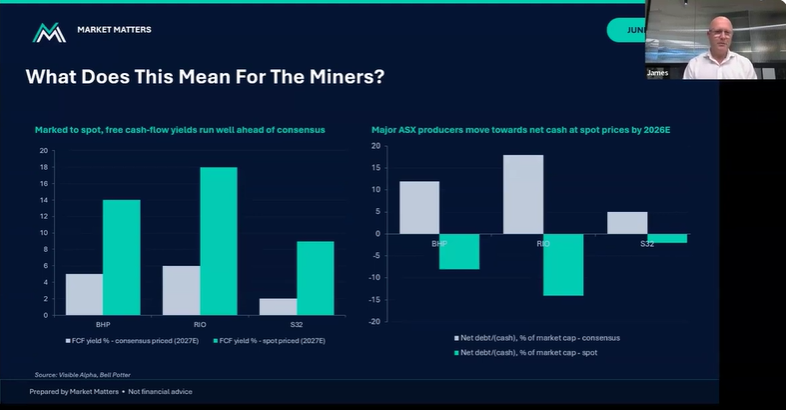
Along the way there have been plenty of twists in the tale, as there’s likely to be into 2030, but we structure our portfolios with more of a 3–6-month outlook in an attempt to avoid steep drawdowns, e.g. we went too early overweight the miners before they turned sharply in 2025 which led to some uncomfortable times before the likes of BHP more than doubled in 15-months.

Moving forward, all of our portfolios will be guided by both our macro view (top-down) and stock selection (bottom-up) at any given time, e.g liking the miners at present, a sector that historically outperforms in an inflationary environment, while being light on exposure to the Australian consumer.

We still see the market improving into Christmas, but we were flagging the current September softness through August. When we believe it’s time to pivot portfolios more defensively, as the macro headwinds you’ve mentioned take hold, would imply we are likely to increase exposure to the likes of:

  • Consumer staples, Utilities, Healthcare and Telcos – the traditional “defensives.’

NB We wouldn’t be surprised if we make such a pivot in the next 6-12 months, it’s been a while since the ASX corrected 15-20%.

chart
image description
US 30-year Bond Yields
image description

Relevant suggested news and content from the site

Back to top