Seeking some clarity on implications of Warsh’s appointment.
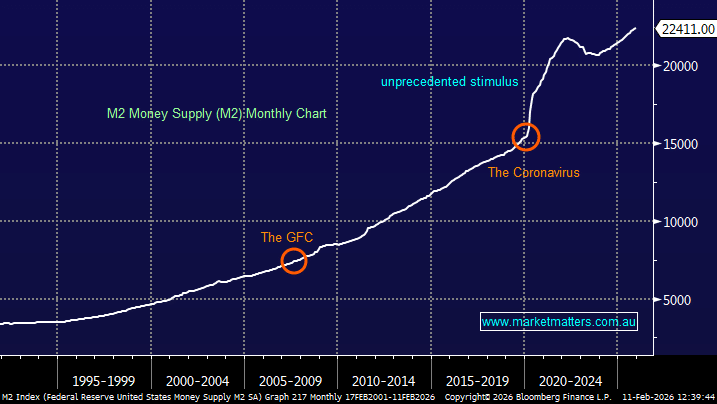
I have some real concerns about Trump’s appointment of Kevin Warsh as Chair of the US Fed. Warsh has been appointed for four years by a president who has so little understanding of the complexities of the decisions facing the chairman of the US Fed. He considers that it is the easiest job in the government as he believes Powell was able to come to the office one day a month, flip a coin and decide on its fall what the interest rate should be. The complexities are brushed aside with the only criteria being would he implement Trump’s agenda of lowering interest rates, regardless of the economic conditions. As Torsten Slok has shown in his three graphs of 6th February 2026, there are three big drivers of inflation: upside pressures from wage growth; rising industrial commodity prices and dollar depreciation. Only the last one can be directly influenced by monetary policy. Warsh, in typical Trump fashion, plans to upend the decision-making processes in the Fed. He dislikes the data-dependent approach and may end the dot-plot which is so useful for indicative forecasting. Stephen Bartholomeusz sets out some major risks with Warsh’s chairmanship (Sydney Morning Herald, February 6). Warsh wants to reduce the size of the Fed’s balance sheet and may end the QE at an inappropriate time, as the full effects of Trump’s tariffs are yet to be felt in the economy. Thus, there is no surety that the US Fed would inject funds into the markets as was done by the New York Fed during the GFC when they injected US$110 billion to ease financial pressures. Finally, Warsh has great faith that AI will quickly boost productivity, with resulting increasing growth and lower interest rates. Much to been seen here! As I see it, the markets will respond with increased volatility, as ever. How do you see the months ahead?