Hi Graeme,
It’s important not to get too fixated on shorting. It has been part of markets for decades; it simply gets far more airtime today because short-interest data is readily available and closely followed.
From our perspective, we don’t have an issue with the practice itself. Short sellers add liquidity and, importantly, provide another view on valuation and earnings expectations. A few points are worth keeping in mind:
- Professional short sellers generally know what they’re doing — if they consistently get it wrong, they don’t stay in business for long. So when short interest builds materially in a stock we own, we take notice, even if we don’t necessarily agree with the thesis.
- Every short position ultimately has to be bought back. When the shorts are right, that can reinforce downside momentum; when they’re wrong, the resulting short squeeze can be sharp and aggressive.
- Ultimately, however, earnings and cash flows drive share prices over the medium to long term. Shorting can influence sentiment and volatility, but it cannot permanently suppress a company that continues to deliver.
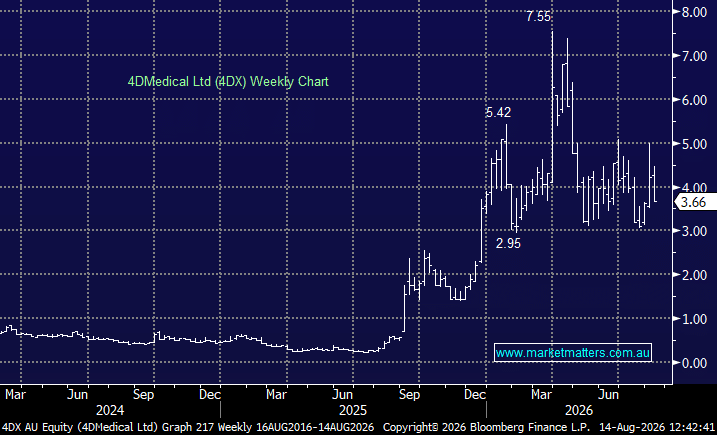
In the case of 4DMedical (4DX), around 12% of the company is currently sold short. In simple terms, those investors are betting that a business valued at roughly $2.2bn will fail to live up to the expectations embedded in its share price. With only around $22m of revenue currently forecast for FY27, there is clearly a lot of future success already priced in.
That doesn’t mean the shorts will be right. If 4DX can successfully commercialise its advanced lung-imaging technology, build adoption and convert its significant growth opportunities into revenue and earnings, there is substantial upside potential — and a large pool of short positions that would eventually need to be covered.
As for trading around the volatility, it can work in hindsight, but it is much harder to execute consistently in real time. Our preference is generally not to let short-term price action dictate the investment case. If the fundamentals remain intact and valuation still makes sense, weakness can create an opportunity to add; equally, after a strong run, trimming can be sensible.
The key is to make those decisions based on valuation and the evolving earnings outlook, rather than simply because the stock has fallen or rallied.
For us, the overriding principle is straightforward: look through the short-term noise, including short selling, and focus on whether the company is ultimately delivering the earnings growth the market is expecting.