As discussed in today’s note, one of the themes we are watching closely is the negative wealth effect and what it means for discretionary spending, particularly at the premium end of the market.
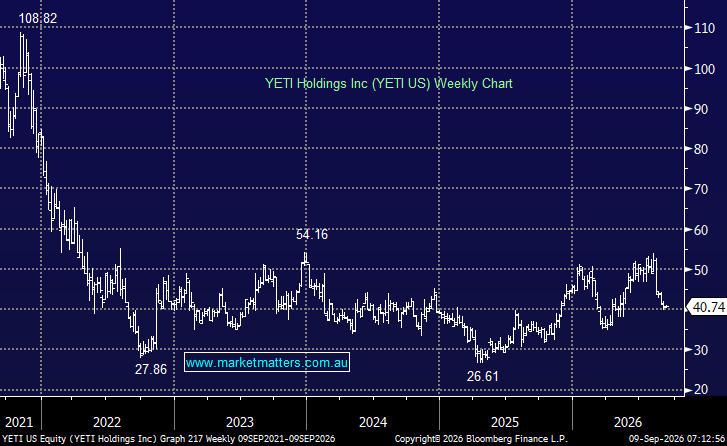
YETI fits neatly into this discussion. It has built an excellent brand around premium coolers, drinkware and outdoor products, and we continue to think the brand has real value. However, these are ultimately discretionary purchases, and many sit in categories where consumers can delay spending, trade down, or simply decide they already own enough.
This is particularly important when household confidence is softening and asset prices are under pressure. When consumers feel wealthier, premium discretionary purchases are easier to justify. The reverse is also true. Higher interest rates, softer property prices, or reduced confidence can create a negative wealth effect well before employment or incomes deteriorate materially.
For YETI, the risk is amplified by the nature of some of its categories. Coolers are relatively durable products with a stronger functional element, but drinkware is more exposed to fashion, brand momentum and replacement cycles. Consumers generally don’t need another premium drink bottle, tumbler or mug; they buy one because the brand is desirable.
That can be a powerful tailwind when a category is hot, but it can also reverse quickly. We’ve seen this dynamic before with brands such as Frank Green, Stanley and others, where a product can become almost ubiquitous before consumer attention moves elsewhere – our drink bottle draw at home is littered with examples. Premium drinkware is a large category today, but it is also inherently more transient than many traditional consumer staples.
This doesn’t mean YETI’s brand is suddenly impaired. Its recent result actually showed plenty of strength, particularly in Coolers & Equipment and margins, while international growth remains encouraging. The issue is more about what multiple investors should pay for a premium consumer brand when parts of its growth profile are cyclical and trend-sensitive.
YETI has historically deserved a premium because of its brand strength, high margins and growth potential. But in a negative wealth-effect environment, we think investors should place greater emphasis on repeat purchase behaviour, category durability and pricing power, rather than simply extrapolating past growth.
We continue to own YETI, although we did trim the position ahead of their recent results. For us, the investment case from here increasingly rests on whether YETI can broaden beyond drinkware, continue growing internationally and demonstrate that its brand has more staying power than the latest consumer trend. The company doesn’t need drinkware to remain fashionable forever, but it does need to prove that YETI itself is bigger than the fashion cycle.
MM remains cautiously long YETI US
Add To Hit List