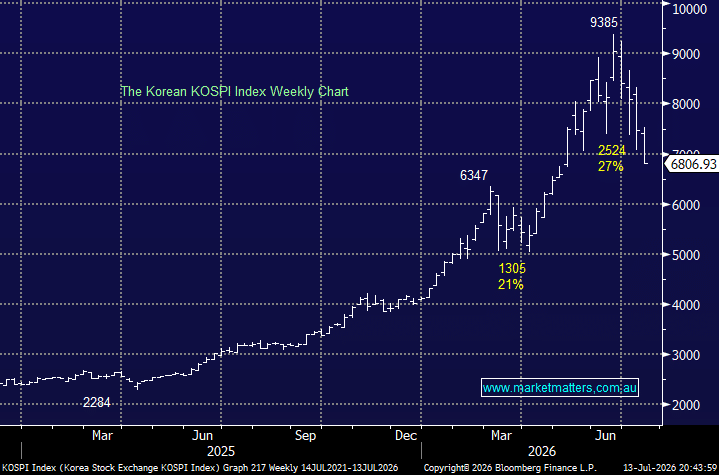
Semiconductor stocks have remained in focus over the last 24-hours coming under heavy pressure on Monday, with the KOSPI falling almost 9%, despite the successful US listing of AI memory leader SK Hynix (SKHYV US) on Friday. Ironically, SK Hynix became the biggest drag on the index, plunging a record 15.4% in Seoul as investors rotated into its newly listed US ADRs, which surged +13% on debut.
Panic selling of a crowded market is not a new song book for investors over recent years, but in this case it’s happening in an extremely profitable space, e.g. SK Hynix is expected to make a full-year 2026 profit of approximately US$15.6bn, more than News Corp’s (NWS) market cap! The sell-off has created a clear divide across the semiconductor sector. Memory names such as Micron, and by extension SK Hynix and Samsung, are now trading on near-trough valuations, while equipment and logic stocks remain relatively expensive despite the correction.
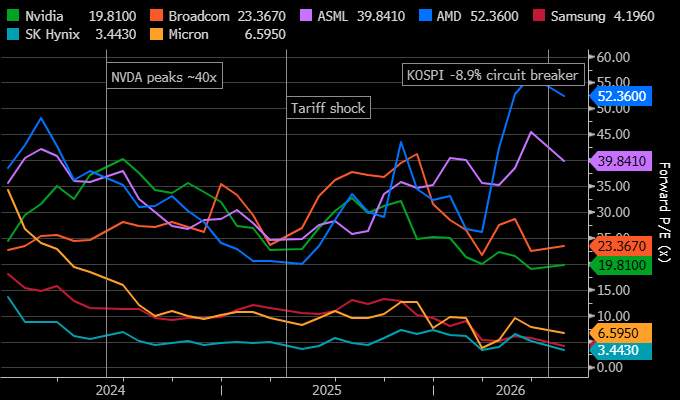

The key question is whether the memory cycle has peaked. Samsung’s “beat but sell” reaction and SK Hynix’s sharp decline suggest the market is increasingly pricing in that risk, rather than assuming AI-driven demand has permanently reshaped the industry’s traditional boom-and-bust cycle. Even TSMC’s record revenue failed to lift sentiment, highlighting that investors now want clear evidence that AI demand can continue to justify elevated earnings expectations.
-
The recent washout in semiconductor stocks does have hallmarks of capitulation, and our bias is that the worst of the selling may soon be behind us, but this is not a trend to fight for the faint hearted!