Dicker Data (DDR) delivered a strong 1H26 result, with earnings comfortably ahead of expectations and guidance upgraded. The technology refresh cycle we’ve previously highlighted continues to provide a meaningful tailwind, particularly across hardware and software, although after the recent share price strength we think much of the good news is now reflected.
The key numbers were strong:
- Australian gross revenue rose 18% to $1.83bn, around 4% ahead of consensus.
- New Zealand gross revenue increased 1.5% to NZ$323m, broadly in line with consensus
- Software sales rose 18%, while hardware increased 12%.
- Operating cash flow was particularly strong at $43m, well ahead of consensus
- Net debt finished at $291m, better than forecast.
Importantly, DDR also upgraded its FY26 guidance. Group revenue is now expected to be $4.3–4.4bn, while PBT guidance of $162–165m implies growth of around 31% on FY25 and sits roughly 12% above prior consensus at the midpoint. Management also said the strong operating momentum seen in 1H has continued through July and August.
The result reinforces the trends we highlighted when we owned DDR in the Income Portfolio last year. A combination of AI and cloud-related infrastructure spending, the broader PC replacement cycle and the end of Windows 10 support has driven a substantial rebound in technology spending after a relatively subdued period.
However, we remain cautious about extrapolating the current growth rate too far into the future. Some of the recent strength is likely to represent demand being pulled forward, as customers accelerate hardware upgrades and replacement programs. We also expect some margin dilution in the second half from product mix, supply constraints and softer unit demand, even though the near-term earnings momentum remains strong.
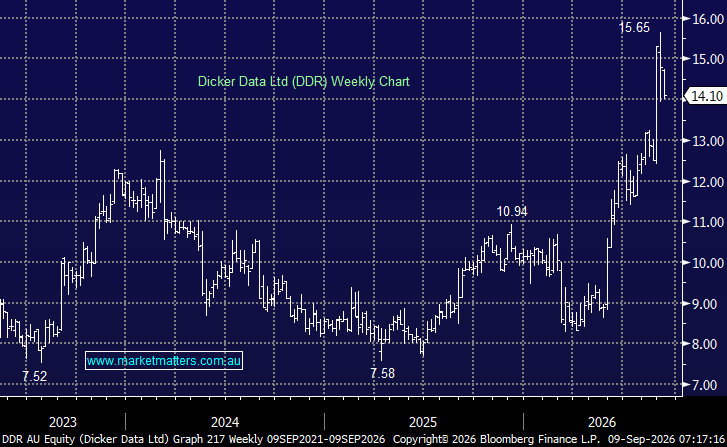
That creates an interesting setup. We continue to like DDR as a business, and the result was clearly better than we expected, but valuation matters. The stock has moved a long way since we sold out in the Income Portfolio, (way too early), back in January, but at current levels we don’t think investors are being adequately compensated for the possibility that today’s elevated growth rates may moderate as the refresh cycle matures.
DDR has executed very well, and the recent result has led to earnings upgrades. However, we think the share price has got a bit ahead of itself. We would be interested in owning DDR again, but below $13 rather than chasing it after a strong cyclical upswing. The business remains attractive – the price is the issue.
MM is neutral DDR above $14
Add To Hit List