Hi Peter,
Unfortunately not is the answer, the larger the stocks and greater the turnover the more efficient markets become, i.e. arbitrage is active if there are decent pools of money to be had.
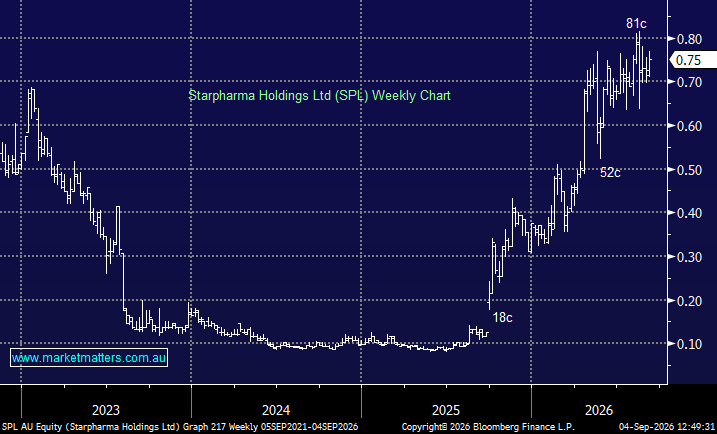
The SPL structure itself was shareholder-friendly: renounceable, fully underwritten and pro-rata, rather than a heavily discounted placement that disproportionately dilutes retail shareholders. We like this approach.
For context, Starpharma raised ~$32 million through a fully underwritten 1-for-7.5 renounceable entitlement offer at $0.57 per new share. The important point is that it was renounceable, so shareholders did not have to either participate or simply lose the value of their entitlement. They could take it up, sell the entitlement on market, transfer it to another party, or do nothing.
What you are saying (we presume) is you could sell your shares at say ~72c, buy the rights on market at say ~10c, and exercise them at 57c for a total outlay of 67c, making ~5c in the middle. Over the time period the SPLR rights were active – the average daily turnover was only ~$327,000, which would have largely kept professional traders away allowing you to benefit from the miss-pricing, not common in the stocks we usually hold – well played your end!