Hi Paul,
In simple terms it comes down to relative value and associated risk. Firstly, central banks like the RBA and Fed adjust the cash rate, the interest rate at which commercial banks borrow and lend overnight funds, primarily to control inflation and support economic stability.
When inflation is too high, they raise the rate to make borrowing more expensive, cooling spending and investment; when economic growth slows, they lower it to stimulate activity by making credit cheaper.
- This year, as we’re sure all MM members are aware, the RBA has hiked interest rates 3 times year by 0.25%.
Bond prices are driven primarily by interest rate expectations, with prices moving inversely to yields as investors reprice future cash flows based on inflation outlook, central bank policy, and credit risk.
- When bonds fall, pushing yields higher, they look relatively more attractive when compared to equities.
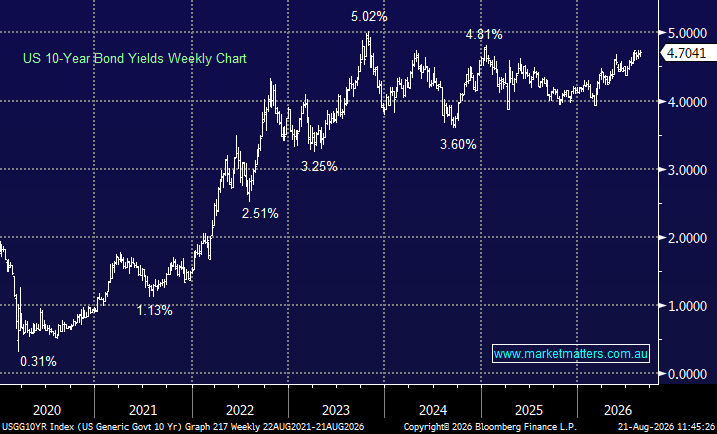
The average return of the ASX 200 over the last decade is ~10.7%, including dividends. Hence the yield of relative “risk free” government bonds will determine how investors, of all sizes, spread their money. Referencing the US Treasuries you mentioned:
- At their extremes, in 1981 US 10-year bonds were yielding ~15.8% compared to ~0.50% in 2020., i.e. the former made average equity returns average while 2020 made stocks look far more attractive.
Eventually these bond yields exerted their influence on stocks, i.e. equities formed a major bottom in 2020 while in 1981 the ASX tumbled more than 16% from its high.