Hi Carl,
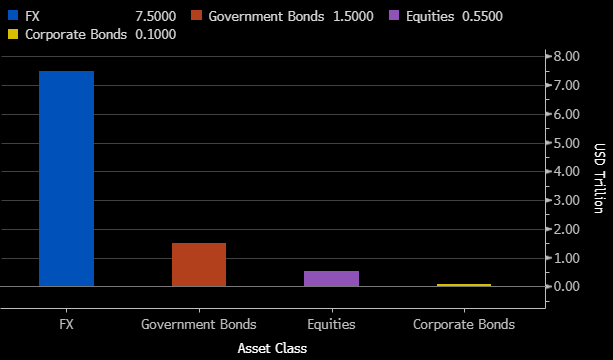
The bond market is bigger than the equity markets , but it’s the FX markets that are by far the largest, especially from a turnover perspective:
- FX $7.5 trillion, Govt Bonds $1-2 trillion, equities $500-600bn, and Corporate Bonds significantly lower – estimate from Bloomberg in US$.
Bond traders make money, or try to, from a number of different approaches:
- Price appreciation (trading) – Traders buy bonds when they expect interest rates or bond yields to fall, then sell after prices rise. This is common among macro hedge funds, bank trading desks and active bond managers.
- Carry (income) – Long-term investors such as pension funds and insurers often hold bonds to maturity, earning regular coupon payments. Returns are driven largely by the yield locked in at purchase.
- Bid-ask spread (market making) – Dealer banks make markets by quoting buy (bid) and sell (ask) prices. Their profit comes from the spread between the two rather than betting on market direction.
- Relative value trading – Traders exploit pricing anomalies between similar bonds, buying the cheaper bond and selling the richer one, aiming to profit as valuations converge.
- Carry and roll-down – Returns come from both collecting coupon income and benefiting as a bond moves closer to maturity. On an upward-sloping yield curve, this “roll-down” can lift prices even if market yields are unchanged.
- Credit trading – Rather than betting on interest rates, credit traders take views on an issuer’s financial health. Improving credit quality typically narrows credit spreads and pushes bond prices higher.
Most professional bond investors combine several of these strategies. Long-term investors tend to focus on carry, while hedge funds and trading desks are more active in price, relative value and credit trading.