Origin makes money through its energy retail and integrated gas businesses. It sells electricity and gas to households and businesses, earning retail margins and wholesale generation income, while also holding a major stake in Australia Pacific LNG (APLNG), which generates earnings from domestic gas sales and LNG exports to Asia. In simple terms, Origin combines retail energy exposure with upstream gas production and export income.
Origin stands to benefit from rising AI-driven energy demand through both its retail and generation exposure. Higher electricity consumption from data centres can support stronger wholesale prices and increased volumes, lifting margins across its Energy Markets division. As a retailer, Origin may also secure large commercial supply contracts tied to data centre growth. In addition, if firmer demand increases reliance on gas-fired generation to stabilise the grid, Origin’s gas portfolio — including its stake in APLNG — could see supportive domestic pricing dynamics. While the uplift in Australia is unlikely to match US scale, incremental demand should act as a medium-term earnings tailwind.
Origin benefits from higher gas and electricity prices as well as volumes, while APA mainly benefits from increased contracted gas transport volumes without direct exposure to commodity price upside. In other words, ORG has more upside if energy prices strengthen while APA offers steadier but capped returns – ORG is forecast to yield 5.1% fully franked over the next 12-months.
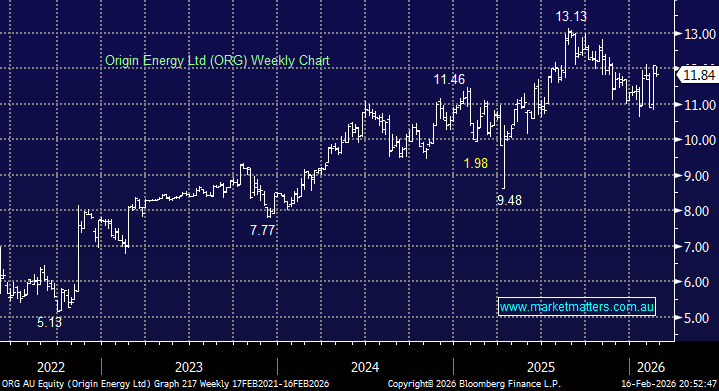
- We can see ORG initially making new highs above $13, or 10% higher.
MM is bullish towards ORG below $12
Add To Hit List