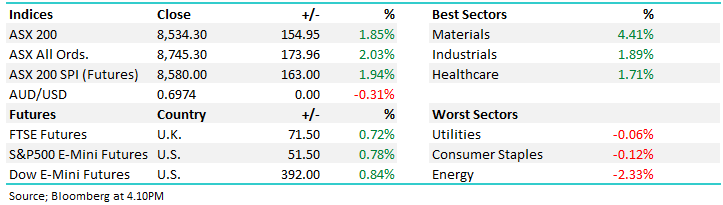
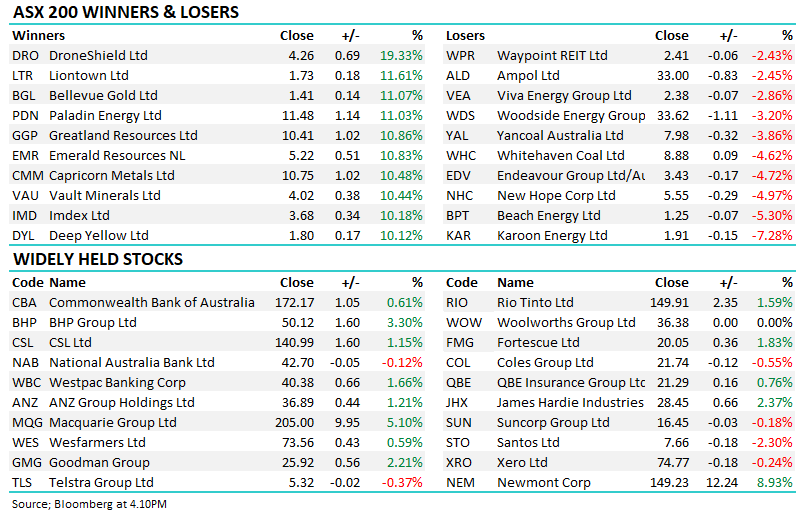
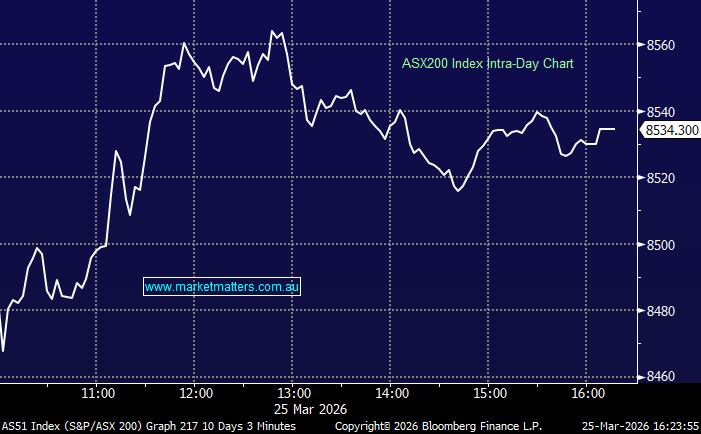
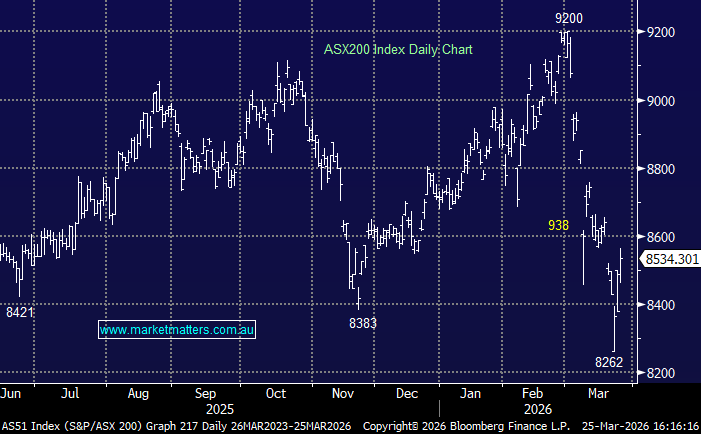
The ASX200 finished the week down 0.4% but still managed to advance +0.9% for June; overall, local equities experienced another choppy week dominated by moves on the stock/sector level. However, while the index appeared to have experienced a fairly quiet week, it was a very different story in credit markets following the hotter-than-expected CPI spring on Wednesday:
The ASX200 closed unchanged on Thursday with no lead from overseas markets; most local traders simply sat back and watched the Guzman y Gomez (GYG) IPO commence trading. By the end of the day, GYG was up +36%, valuing the Mexican fast food chain at over $3bn. At MM, we thought it would open strongly, but that was above our bullish expectations. As we said yesterday, let's hope this reignites some confidence in both local capital markets and stocks in general.
The ASX200 market slipped lower throughout the shortened week, finally closing down -2%, after showing so much promise going into the long weekend. With the likes of BHP Group (BHP), RIO Tinto (RIO), Sandfire Resources (SFR) and South32 (S32) all making fresh multi-week lows, it was always going to be a tough ask for the resources-laden ASX200 to advance. Conversely, the less influential Tech Sector fared much better, with most major names advancing in unison with the US NASDAQ, which posted fresh all-time highs in most sessions over the 5-days.
The ASX200 market showed impressive resilience last week, rallying over 2%, inching ever closer to a new all-time high. The 8,000 milestone is now less than 2% away, a repeat performance, and we’re there. The strength should have encouraged the bulls, especially considering the market's ability to close on its highs for the week ahead of the US Jobs Report. However, the market continues to deliver very mixed results on the stock and sector level, with the resources likely to take their turn in the “naughty corner” at the start of next week after copper and gold tumbled on Friday night. NB: The ASX is closed Monday.
The ASX200 rallied sharply into the close on Friday, reducing the weekly decline to 0.3%; it certainly felt far worse on Thursday morning – a classic case of “End of the Month” window dressing. At its worst on Thursday, the local market had pulled back 300 points or 3.8%, but come the close on Friday, it was smack in the middle of its last 4 months' trading range, hence our current market neutral stance.
The ASX200 slipped -1.1% last week, although it felt much worse on Thursday and Friday as profit-taking swept through the Resources Sector following steep corrections in copper and gold. The catalyst for the move into the weekend was the release of the Fed Minutes from April 30th – May 1st, in other words, a great insight into the current thinking of Jerome Powell et al. The meeting came hot on the heels of a deluge of economic data that demonstrated inflation was remaining sticky
The ASX200 enjoyed another solid week, finishing up +0.8% after retesting its all-time high on Thursday following market-friendly US inflation data on Wednesday night AEST. This week was a huge win for the Doves, with major economic data in both the US and Australia pointing towards an economic slowdown and inflation that might not be as sticky as many feared throughout April
The ASX200 enjoyed a strong week, closing up +1.6% even after a sharp drop on Thursday when the retail and banking sectors dragged the broader market lower. By Friday's close, 10 out of 11 sectors on the main board had closed higher, with only the Consumer Discretionary Sector finishing in negative territory. On the stock level, there were some standout performances on both sides of the ledger, while the local index finished 2% below its all-time high, lagging slightly on the global stage:
The ASX200 edged +0.7% higher last week as easing bond concerns saw the rate-sensitive stocks/sectors recover strongly. However, some of April's best-performing areas of the market encountered some profit-taking. For example, the Real Estate +3.2%, Tech +2.3%, and Consumer Discretionary +2.1% sectors advanced strongly, whereas the Materials Sector slipped -0.3%
The ASX200 experienced a news-packed, volatile week, closing down 107 points on Friday. It might surprise some subscribers to know that the ASX200 ended the week slightly higher; it certainly didn’t feel like it on Friday. Wednesday's strong CPI print cast a long cloud over the rate-sensitive stocks/sectors. Australian credit markets are now factoring in the very real risks of a rate hike in 2024 after looking for two cuts only two months ago.
The ASX200 closed unchanged on Thursday with no lead from overseas markets; most local traders simply sat back and watched the Guzman y Gomez (GYG) IPO commence trading. By the end of the day, GYG was up +36%, valuing the Mexican fast food chain at over $3bn. At MM, we thought it would open strongly, but that was above our bullish expectations. As we said yesterday, let's hope this reignites some confidence in both local capital markets and stocks in general.
The ASX200 market slipped lower throughout the shortened week, finally closing down -2%, after showing so much promise going into the long weekend. With the likes of BHP Group (BHP), RIO Tinto (RIO), Sandfire Resources (SFR) and South32 (S32) all making fresh multi-week lows, it was always going to be a tough ask for the resources-laden ASX200 to advance. Conversely, the less influential Tech Sector fared much better, with most major names advancing in unison with the US NASDAQ, which posted fresh all-time highs in most sessions over the 5-days.
The ASX200 market showed impressive resilience last week, rallying over 2%, inching ever closer to a new all-time high. The 8,000 milestone is now less than 2% away, a repeat performance, and we’re there. The strength should have encouraged the bulls, especially considering the market's ability to close on its highs for the week ahead of the US Jobs Report. However, the market continues to deliver very mixed results on the stock and sector level, with the resources likely to take their turn in the “naughty corner” at the start of next week after copper and gold tumbled on Friday night. NB: The ASX is closed Monday.
The ASX200 rallied sharply into the close on Friday, reducing the weekly decline to 0.3%; it certainly felt far worse on Thursday morning – a classic case of “End of the Month” window dressing. At its worst on Thursday, the local market had pulled back 300 points or 3.8%, but come the close on Friday, it was smack in the middle of its last 4 months' trading range, hence our current market neutral stance.
The ASX200 slipped -1.1% last week, although it felt much worse on Thursday and Friday as profit-taking swept through the Resources Sector following steep corrections in copper and gold. The catalyst for the move into the weekend was the release of the Fed Minutes from April 30th – May 1st, in other words, a great insight into the current thinking of Jerome Powell et al. The meeting came hot on the heels of a deluge of economic data that demonstrated inflation was remaining sticky
The ASX200 enjoyed another solid week, finishing up +0.8% after retesting its all-time high on Thursday following market-friendly US inflation data on Wednesday night AEST. This week was a huge win for the Doves, with major economic data in both the US and Australia pointing towards an economic slowdown and inflation that might not be as sticky as many feared throughout April
The ASX200 enjoyed a strong week, closing up +1.6% even after a sharp drop on Thursday when the retail and banking sectors dragged the broader market lower. By Friday's close, 10 out of 11 sectors on the main board had closed higher, with only the Consumer Discretionary Sector finishing in negative territory. On the stock level, there were some standout performances on both sides of the ledger, while the local index finished 2% below its all-time high, lagging slightly on the global stage:
The ASX200 edged +0.7% higher last week as easing bond concerns saw the rate-sensitive stocks/sectors recover strongly. However, some of April's best-performing areas of the market encountered some profit-taking. For example, the Real Estate +3.2%, Tech +2.3%, and Consumer Discretionary +2.1% sectors advanced strongly, whereas the Materials Sector slipped -0.3%
The ASX200 experienced a news-packed, volatile week, closing down 107 points on Friday. It might surprise some subscribers to know that the ASX200 ended the week slightly higher; it certainly didn’t feel like it on Friday. Wednesday's strong CPI print cast a long cloud over the rate-sensitive stocks/sectors. Australian credit markets are now factoring in the very real risks of a rate hike in 2024 after looking for two cuts only two months ago.
Check your email for an email from [email protected]
Subject: Your OTP for Account Access
This email will have a code you can use as your One Time Password for instant access
Verication email sent.
Check your email for an email from [email protected]
Subject: Your OTP for Account Access
This email will have a code you can use as your One Time Password for instant access
!
Invalid One Time Password
Please check you entered the correct info, please also note there is a 10minute time limit on the One Time Passcode
To reset your password, enter your email address
A link to create a new password will be sent to the email address you have registered to your account.
Market Matters members receive daily market reports, real-time trade alerts, full access to 5 portfolios and dynamic company data.
Choose how you'd like to proceed:
We have a range of membership options to suit your needs and budget, why not join today and get unlimited access to the premium Market Matters service.