Hi Nick – sorry for the delayed repones on this, as it missed cut-off last week.
We think that is a fair challenge, and the article is worth reading because it looks at the AI boom through a different lens to the usual “is this 2000 again?” debate.
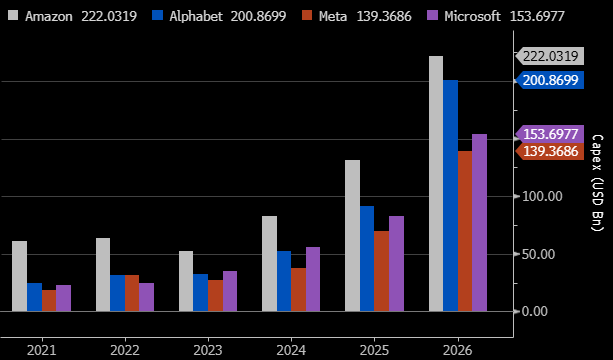
The most interesting part of the argument is that the AI build-out increasingly has characteristics of a credit and infrastructure cycle, not simply a technology equity bubble. The author’s point is that a lot of the spending is being financed through long-dated commitments, leases, asset-backed structures and borrowing against future cash flows, so the risk may not require AI demand to collapse outright. It may simply require the rate of growth in spending to slow sufficiently for refinancing economics and asset values to become more difficult. That is a useful framework, particularly given how concentrated parts of the ecosystem have become around a relatively small number of hyperscalers, AI labs and infrastructure providers.
Where we would be more cautious is in taking the 2008 comparison too literally:
- The large hyperscalers funding much of this investment are extraordinarily profitable, cash-generative businesses with strong balance sheets, which is very different from the highly leveraged household and mortgage structures sitting underneath the GFC.
There is also genuine underlying demand for compute and a potentially very large productivity opportunity from AI. That does not mean there cannot be over-investment or a painful capital-cycle correction, we have already been discussing exactly that risk, but the transmission mechanism and balance-sheet vulnerability are not identical to housing in 2008.
We think the article is solid insofar as it highlights another important layer of risk we should all be conscious of. We are cautious around areas where spending, financing and expected future utilisation appear increasingly circular, and we think investors should question whether or not adequate returns will be achieved on invested capital. But at the same time, we do not think that automatically invalidates the stronger businesses in the ecosystem.