Australian inflation reaccelerated in March, with headline CPI rising 4.6% year-on-year, up from 3.7% in February, the highest annual rate since September 2023. Automotive fuel prices jumped 32.8% in March, the largest monthly increase since the ABS series began in 2017. Transport rose 8.9% annually, while housing remained the biggest annual contributor, up 6.5%, and food and non-alcoholic beverages rose 3.1%.
Importantly, this is not a demand-driven inflation scare, but it is still a problem for the RBA. A petrol-led spike is effectively a tax on households, which should slow discretionary spending over time, but it also risks flowing through freight, food, services and wage expectations if it persists.
The more important number for the RBA was the trimmed mean, which held at 3.3% annually, still above the top of the RBA’s 2–3% target band. The quarterly increase of 0.8% came in slightly below the 0.9% expected by both economists and the RBA themselves.
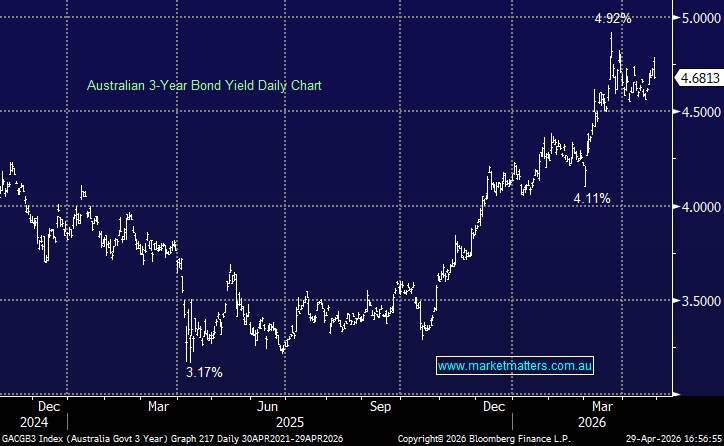
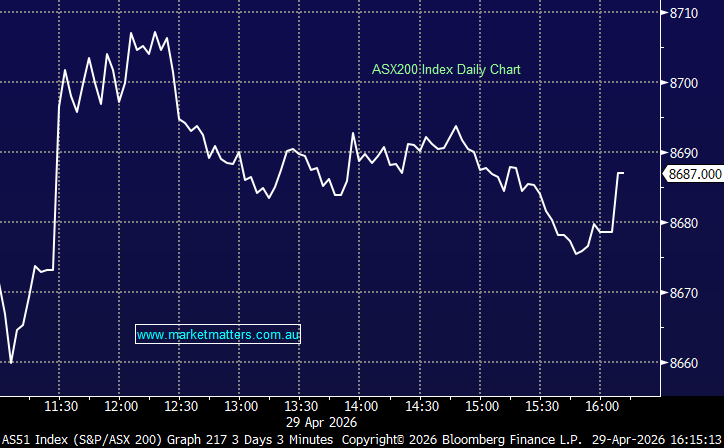
- Bond yields fell on the release, with the Australian 3 year yield down 4bps to 4.69% – still pricing in rate hikes from here.
A rate hike in May remains in play. Money markets moved to price around a 76% chance of a hike after the data, down from 88% beforehand, but still implying the RBA is more likely than not to lift the cash rate from 4.10% to 4.35% next week.