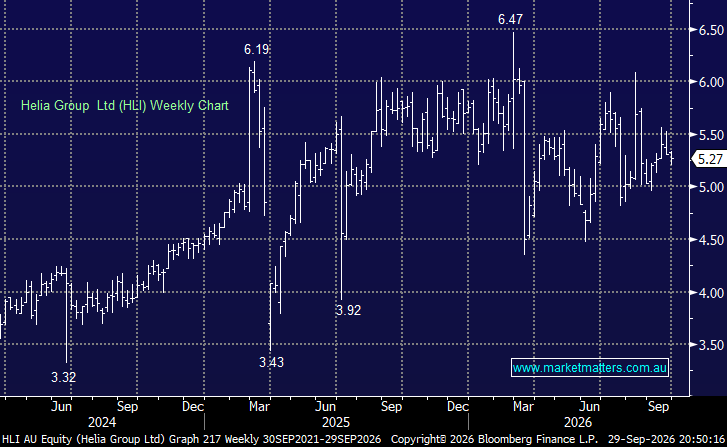
We last owned Helia in the Active Income Portfolio in 2025, entering after the sharp sell-off around the loss of ING and subsequently exiting after a strong rebound in the share price just 3-months later. At the time, the thesis was largely about capital returns cushioning the deterioration in the underlying business, and that played out well. The key change since then is that ING was ultimately renewed for another four years earlier this year, while CBA remains lost. Today, the question is less about the initial dislocation and more about how much value remains in a shrinking but highly cash-generative book.
Helia’s investment case has increasingly become a question of how quickly the existing book runs off and how much capital can be released along the way. Yesterday’s RBA hike to 4.60% adds another headwind, particularly for mortgage volumes and, with a lag, claims. The encouraging part is that the existing book remains in relatively good shape, with delinquencies down and negative equity still very low.
Key takeaways from HLI’s August 1H26 result:
- Underlying NPAT A$106.3m
- Insurance revenue A$170.6m, down 6.4%, reflecting the lower gross-written-premiums (GWP) flowing through from recent book years.
- GWP A$61.6m, down 44%, primarily due to the loss of CBA and lower first-home-buyer volumes.
- Closing delinquencies fell 4%, with negative equity at just 0.4% of the portfolio.
- Helia returned 43cps in interim dividends and announced a A$75m buyback.
- ING has been renewed for another four years, providing some stability to the customer base.
The rate impact is worth splitting into three channels. First, new business: higher rates reduce borrowing capacity and mortgage activity, shrinking the pool of new loans requiring LMI. Helia is already dealing with a much smaller market following the loss of CBA, while the Government’s 5% Deposit Scheme is another structural headwind as some first-home buyers who previously needed LMI no longer do. Lender self-insurance is also taking a slice of the market.
Second, the existing book: this is the bigger uncertainty from today’s hike. Higher repayments will put pressure on borrowers, particularly the 2021–23 vintages that were written when rates were much lower. Claims have so far remained benign, with delinquencies actually falling, but there is a lag between higher rates and mortgage stress. If house prices weaken at the same time, the equity buffer protecting Helia against claims becomes less valuable. This is the part of the story where the next 6–18 months will tell us more.
Third, the investment portfolio: higher rates provide some benefit through better reinvestment yields on Helia’s large fixed-income portfolio, but we’d view this as a partial offset rather than the reason to own the stock. The more important question is whether claims remain below historical levels and whether Helia can continue releasing capital from the runoff book.
So, has the bad news been priced in? The CBA loss and shrinking LMI market are well understood, while the impact of today’s higher rates on the older mortgage vintages is still to play out. Against that, Helia has a strong capital position, low claims and meaningful capacity to return capital. The ING renewal is also a useful offset to the broader customer attrition.
The roughly 6.5% forward-yield, based on around 34cps of annual dividends, is attractive, but right now we don’t think it quite compensates for the shrinking addressable market and the potential impact of higher rates on claims and mortgage volumes. We’d rather wait for a better entry point than chase the yield today. Around $4.70, however, we’d become much more interested — at that level, the combination of a large capital base, benign claims experience and a yield approaching ~7.2% would be difficult to ignore.
MM is neutral toward HLI around $5.30
Add To Hit List