What Matters Today in Markets: Listen here each morning or find all Market Matters Podcasts on Spotify.
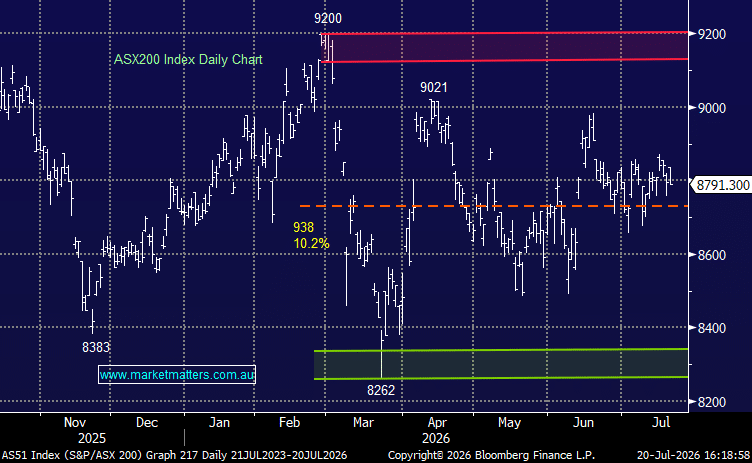
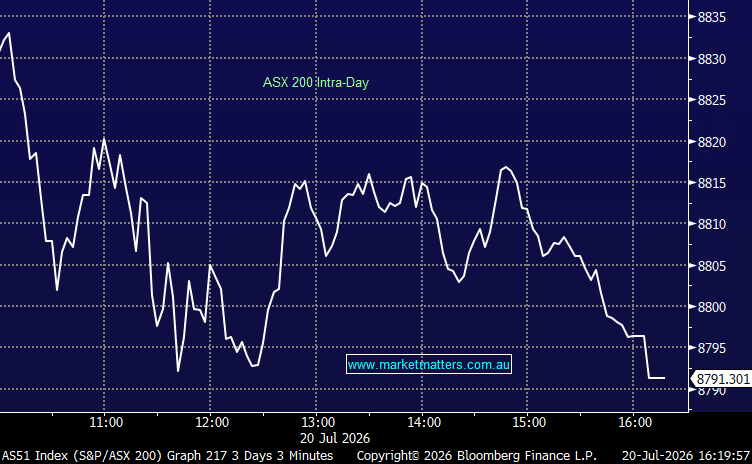
Equities have been volatile through 2025–26, unsettled by both the Liberation Day tariff shock and the US-Iran conflict, yet despite the relentless headlines, the ASX 200 has gained less than 1% since the start of 2025. However, on the stock and sector level in particular, volatility has been even more pronounced due to the combination of increased leverage and crowded positioning:
- Leverage across financial markets has risen to historically high levels: Recent Federal Reserve data, along with last week’s investment bank earnings in the US showed hedge fund leverage had risen to its highest level since tracking began, with the Fed describing the vulnerability as “notable.”
- Leveraged retail investing has accelerated, with more than 30% of equity ETFs launched in 2026 being leveraged products, while South Korean margin lending doubled over the past year, fuelled by single-stock leveraged ETFs linked to Samsung and SK Hynix.
- Leverage has spread well beyond hedge funds, with the Fed identifying rising margin lending to mutual funds, ETFs, and pension funds as areas of potential concern.
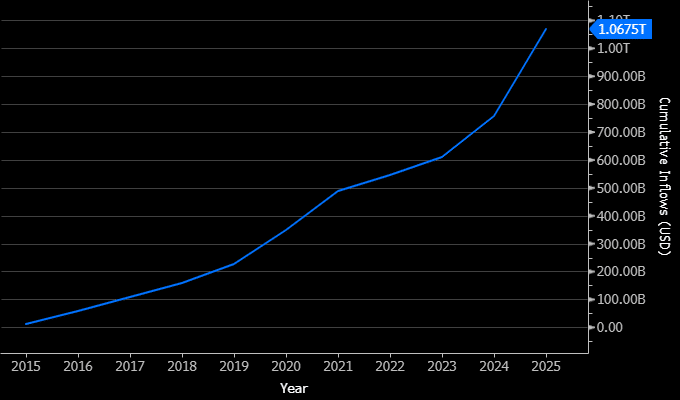
ETFs have grown exponentially over the last decade, adding to the risk mix by making it easier for investors to follow/create momentum into crowded positions that usually look great until the music stops playing. Cumulative ETF inflows crossed $1 trillion by the end of 2025, up from just ~$13B in 2015, making it an asset class to be reckoned with.
The “Certainty Trade”, as it was called in 2025, pushed the likes of CBA and JB Hi-Fi to unprecedented valuations before reversing from outperformers to underperformers as investors ran for the exits.
- We believe the combination of leverage and ETF funds has changed the market’s characteristics in recent years – elastic bands are stretching further in both directions & snapping harder.