The BEAR ETF has retreated in 2025, although recent weakness in local stocks has improved its performance. The objective of this ETF is to allow investors to profit from a fall in the ASX200, often regarded as a hedge for existing portfolios. However, it’s important to understand that bearish ETFs are primarily designed for short-term tactical trades, not long-term protection. If markets don’t fall quickly, the costs and compounding effects slowly but surely erode returns, which is why they “cost money” to hold over time. Four factors combine to weigh on long-term holders:
- Bearish stock ETFs rely on derivatives such as futures, swaps, and options rather than directly shorting shares. These instruments have financing and rollover costs.
- Daily rebalancing is required to maintain the inverse exposure. Over time, this creates compounding drag, especially in volatile or rising markets.
- Borrowing and funding costs are embedded in the structure, similar to paying interest on a short position.
- Management fees are typically higher than for plain index ETFs due to complexity; the BEAR ETF costs 1.38% pa to hold.
During the panic selloff, around April time, the ASX200 fell 16.9% while the BEAR ETF surged +18.5%, a reasonably good correlation in a fast-moving panic-like market. However, the underlying issue with this and similar ETFs is that such declines are rare, with this year’s move the largest correction since the COVID pandemic, and as the chart below illustrates, excellent timing is required for the ETF to deliver for investors and traders alike.
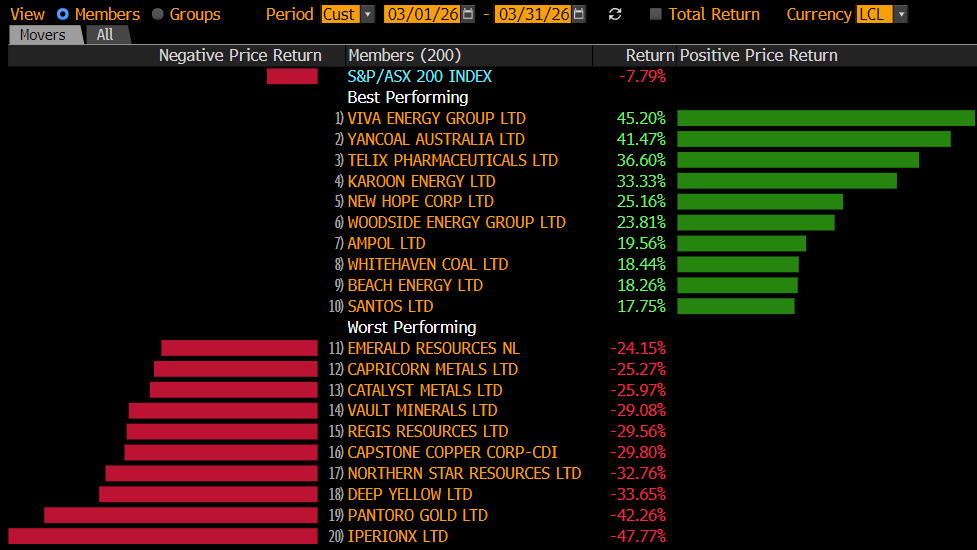
- We can see the ASX200 experiencing a choppy 2026, but that will hardly register on the BEAR ETF.