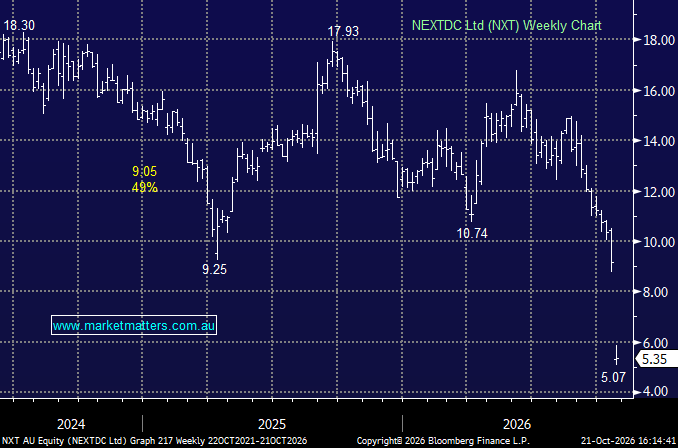
Why has NEXTC (ASX: NXT) plunged 40%?
NEXTDC (ASX: NXT) has suffered a dramatic selloff, plunging more than 40% after slashing FY27 earnings guidance by over a third following power connection delays at its M3 Melbourne data centre. Electricity distributor Jemena suspended connection works in late September following strong community opposition to the installation of concrete power poles up to 22 metres high.
- The disruption has forced NEXTDC to cut its FY27 underlying EBITDA guidance from $385–410m to $245–265m, with the new midpoint of $255m approximately 37% below previous expectations and 36% below consensus.
- Revenue guidance has also been reduced from $615–640m to $475–500m, highlighting the significant earnings impact of delayed customer billing.
Management has responded by cutting FY27 capital expenditure guidance from $5.25–5.75bn to $4.5–5bn, pausing projects without committed customer contracts and undertaking a broader review of its development pipeline. The company is considering alternative power connections, including underground cabling, while potential asset sales and the redeployment of capital towards contracted capacity are also being explored.
However, delays to planning approvals for later stages of M3 add further uncertainty. Importantly, the issue extends beyond the immediate cost of resolving the power connection, with NEXTDC’s highly leveraged expansion model relying on new facilities becoming operational and generating revenue within expected timeframes.
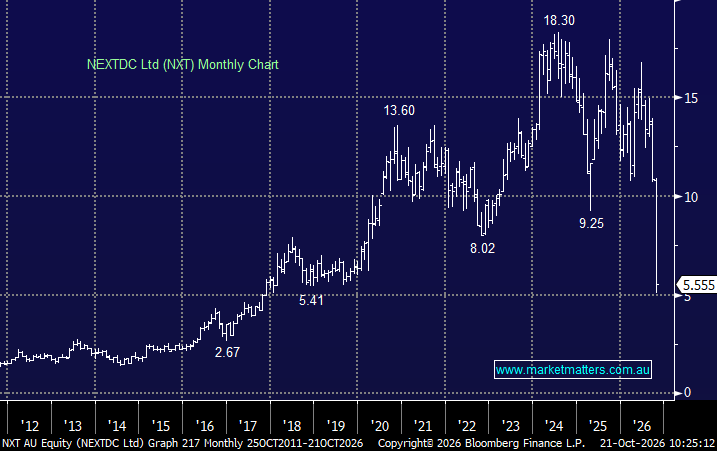
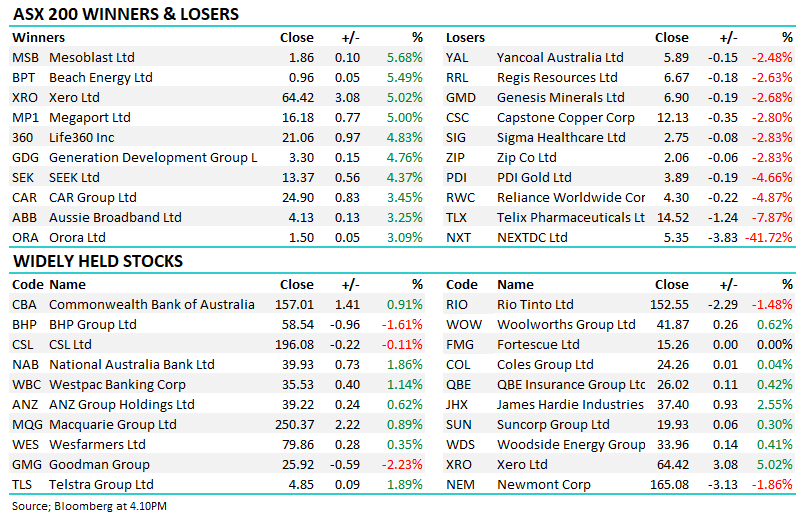
The market reaction has been brutal, with NEXTDC shares falling approximately 42–44% on Wednesday, their worst one-day performance since listing, amid trading volumes reportedly 34 times normal levels.
- The stock has fallen to its lowest level since January 2018, reflecting a dramatic reassessment of the company’s earnings outlook, execution risk and capital requirements.
The collapse is particularly concerning given NEXTDC’s already elevated leverage, with net debt forecast to increase substantially as its development program progresses. Delays to customer billing mean debt and interest expenses continue accumulating without the corresponding uplift in EBITDA, potentially pushing already stretched leverage ratios even higher.
This is a significant setback that challenges confidence in NEXTDC’s ability to deliver its ambitious growth pipeline on schedule. While the long-term demand outlook for AI infrastructure and data centre capacity remains attractive, securing electricity connections, managing construction costs and converting contracted capacity into cash flow are proving increasingly important.
Until there is greater clarity, we believe investors are likely to demand a substantially higher risk premium for NXT leaving us happily on sidelines as holders contemplate a business model that may not be broken BUT has changed dramatically.
- MM has no interest in catching the NXT falling knife.