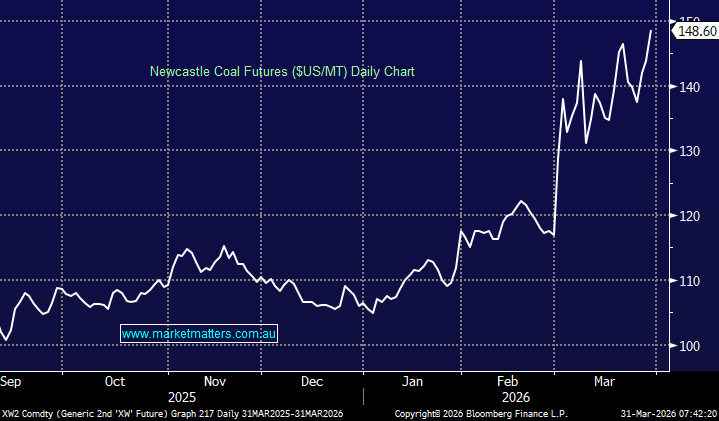
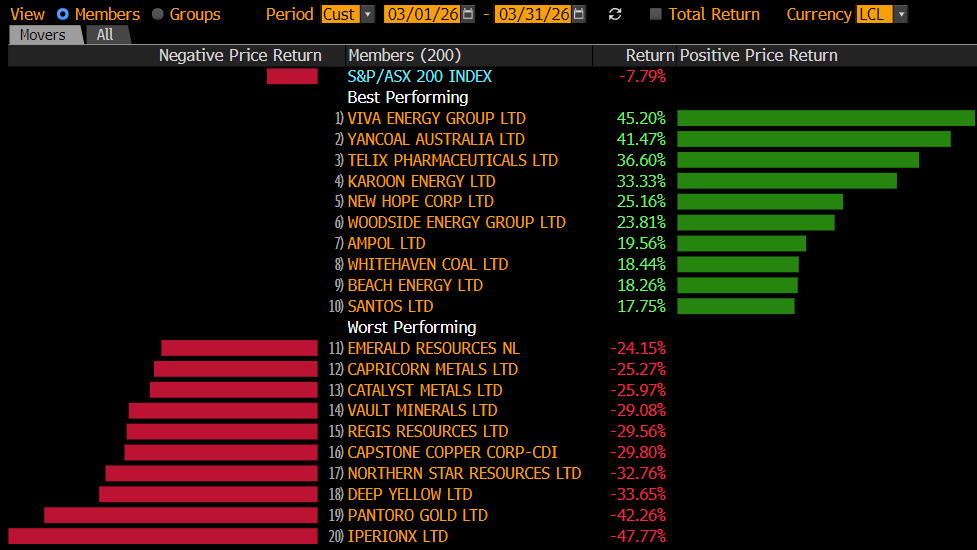
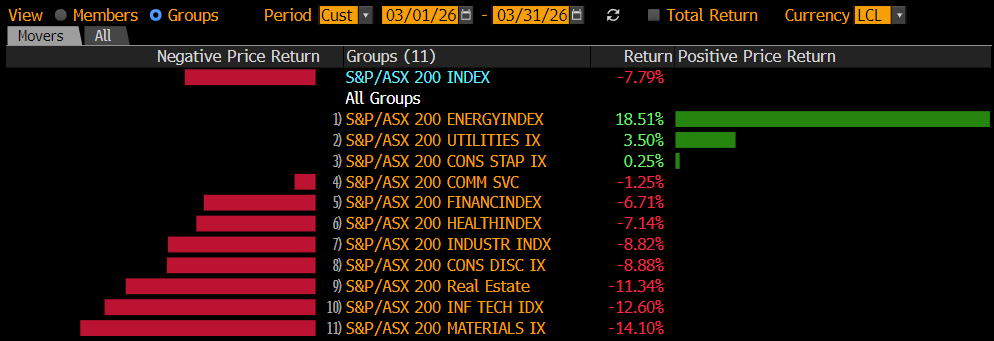
The escalating tensions in the Persian Gulf have disrupted global energy markets, delivering an unexpected tailwind for coal, the most carbon-intensive, or dirty, fuel. Despite years of policy efforts aimed at phasing it out, structural demand across Asia, energy security concerns, and slow progress on renewables were already keeping coal firmly in the mix. Now, a fresh gas supply shock, just a few years after the last, has forced parts of Europe and Asia back toward coal as a reliable fallback. With added political backing in the US, the energy transition is taking a step sideways, increasing the appeal of coal stocks.
For example, Japan, one of the world’s largest LNG importers, announced on Friday plans to expand use of lower-efficiency coal plants to diversify supply, while in Bangladesh and India, coal is already filling gaps left by tighter energy markets. Even Europe isn’t immune. Despite years of transition, higher gas prices are pushing countries like the Netherlands, Poland and the Czech Republic toward increased coal usage, while Germany is weighing the reactivation of idled coal-fired capacity to help contain power costs. Coal currently makes up ~25% of the global energy supply, and reducing it is only looking good in theory – countries simply have no choice but to pull the coal lever as they struggle to meet energy demands.
- We are still bullish on the coal thematic over the coming years as the world slips into an energy deficit, but in the short term, it feels stretched near $US150.